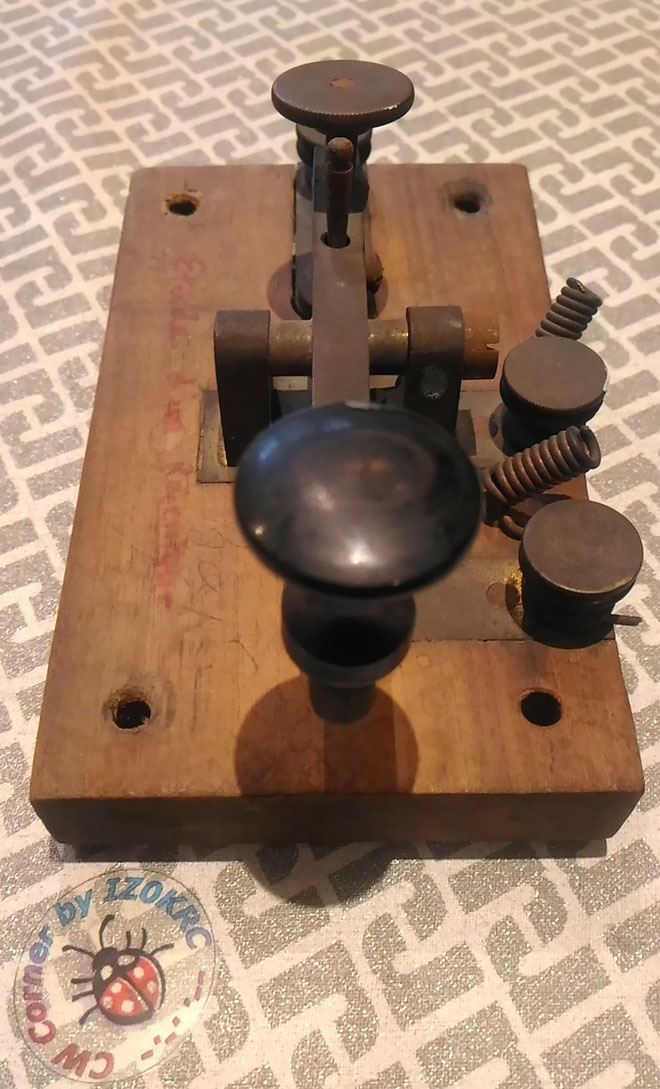
Telegraph key of France
Manipulateur télégraphique
MILITARY FRENCH KEY
Tasti postali di Francia
Una piccola prefazione sulle chiavi postali Francesi è necessaria per spiegare la loro evoluzione.
Le poste Francesi hanno determinato tre differenti momenti, relativi alla produzione di chiavi destinate agli uffici postali e telegrafici dell'epoca. I periodi sono 1882, nascita del servizio telegrafico di Francia ed a seguire modifiche nelle specifiche di produzione si sono avute nel 1907 e poi nel 1913.
I tasti postali sono state prodotte da diversi costruttori sparsi in tutto il paese, la loro denominazione deriva quasi sempre dal nome del relativo produttore.
Ringrazio Christian Chefnay F9WT per l'incredibile mole di dati presente nel suo sito dedicato alle chiavi Francesi http://f9wtchris.wixsite.com/manipulateursmorse/france
Fonte di molte informazioni qui riportate.
Grazie Chirs per condividere le tue preziose informazioni con gli altri appassionati di chiavi telegrafiche.
A brief preface on French postal keys is necessary to explain their evolution.
The French postal service marked three distinct periods in the production of keys for postal and telegraph offices of the time. These periods are 1882, the birth of the French telegraph service, and subsequent changes in production specifications in 1907 and 1913.
Postal keys were produced by various manufacturers throughout the country; their names almost always derive from the name of their respective manufacturers.
I thank Christian Chefnay F9WT for the incredible amount of data available on his website dedicated to French keys: http://f9wtchris.wixsite.com/manipulateursmorse/france
The source of much of the information provided here.
Thank you, Chris, for sharing your valuable information with other telegraph key enthusiasts.
25 Nov. 2018
Maison Breguet Paris
La maison Breguet nasce nel 1775 ad opera di Louis François Clement Breguet, con il suo laboratorio di alta orologeria,
tra i suoi clienti di prestigio figurano Maria Antonietta Regina di Francia, Luigi XVI Re di Francia, Giorgio III re d'Inghilterra ecc. seguiranno nella reggenza della società, il figlio Antoine-Louis Breguet, e poi del nipote Louis Breguet.
La maison Breguet oltre all'orologeria si lanciò anceh ne lbusiness della comunicazione,
il suo fondatore Louis Breguette aveva collaborato con Chappe alla progettazione del telegrafo ottico e così Louis ne ereditò l'attività. Il sistema Chappe utilizzava un grande libro che conteneva i codici con migliaia di frasi semplici o frasi predeterminate. Questi codici furono riutilizzati in forma ridotta nel nuovo sistema di comunicazione a due aghi denominato "sistema Foy-Breguet"
The Breguet house was founded in 1775 by Louis François Clément Breguet, with his haute horlogerie workshop.
His prestigious clients included Marie Antoinette, Queen of France, Louis XVI, King of France, George III, King of England, and others. His son Antoine-Louis Breguet, followed by his grandson Louis Breguet, would later become the company's regents.
In addition to watchmaking, the Breguet house also ventured into the communications business.
Its founder, Louis Breguet, had collaborated with Chappe on the design of the optical telegraph, and so Louis inherited the business. The Chappe system used a large book containing codes with thousands of simple or predetermined phrases. These codes were reused in a reduced form in the new two-needle communication system known as the "Foy-Breguet system."

Foy-Breguette system
Alphonse Foy nel 1839, Foy studiò a fondo il telegrafo Cooke-Wheatstone in uso in Inghilterra. rendendosi conto che il display del telegrafo ad ago utilizzato dal sistema di Cooke-Wheatstone poteva essere adattato per visualizzare i simboli già in uso nel telegrafo ottico di Chappe. Chiese così a Louis Breguet di progettare insieme un nuovo sistema di comunicazione. Il teelgrafo di Foy-Breguette ebbe il suo battesimo sulla linea Parigi Saint-Cloud a Versailles nel 1842, ottenendo l'approvazione ed il finanziamento dello Stato Francese.
Il punto di forza del telegrafo elettrico di Foy-Breguet erano i due aghi che potevano in analogia al telegrafo ottico di Chappe riprodurre le medesime posizioni, un idea vincente, in questo modo si evitavò di spendere tempo e risorse economiche per istruire i telegrafisti al nuovo sistema.
Brequet costrì anche un sistema ad ago singolo, che eliminava l'uso di codici, chiamato sistema a quadrante di Breguet.
Alphonse Foy, in 1839, extensively studied the Cooke-Wheatstone telegraph in use in England. He realized that the needle telegraph display used by the Cooke-Wheatstone system could be adapted to display the symbols already in use in Chappe's optical telegraph. He therefore asked Louis Breguet to collaborate on a new communication system. The Foy-Breguet telegraph was first used on the Paris-Saint-Cloud to Versailles line in 1842, receiving approval and funding from the French state.
The strength of the Foy-Breguet electric telegraph was the two needles that, like Chappe's optical telegraph, could reproduce the same positions. This was a winning idea, as it avoided spending time and money training telegraphers on the new system.
Breguet also developed a single-needle system, which eliminated the use of codes, called the Breguet dial system.
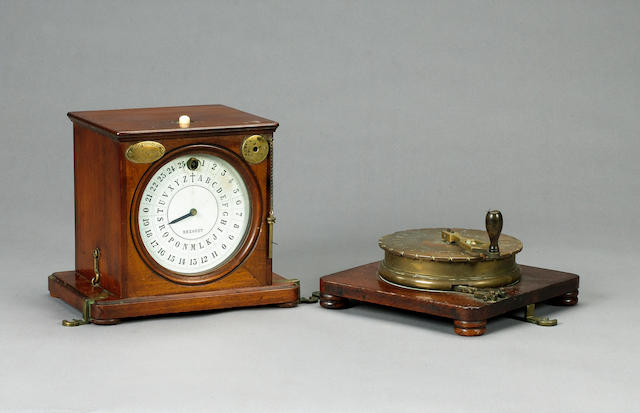
Breguette dial telegraph
Tutti i sistemi pre morse cessanrono in Francia nel 1850, a seguito dell'adesione di molte nazioni alla convenzione telegrafica Austro-Prussiana del 1849.
All pre-Morse systems ceased in France in 1850, following the accession of many nations to the Austro-Prussian telegraph convention of 1849.
11 Novembre 2021 - Update -- Nov 2023
Coming Soon
Early French postal key made by Breguet
TK.FR.001
Soon arrived!
Tasto postale Breguet con molla piatta, primo modello
TK.FR.002
Classico tasto telegrafico postale Francese prodotto dalla nota ditta Breguet.
Classic French postal telegraph key produced by the well-known Bregu company
11 Novembre 2021 - Update -- Nov 2
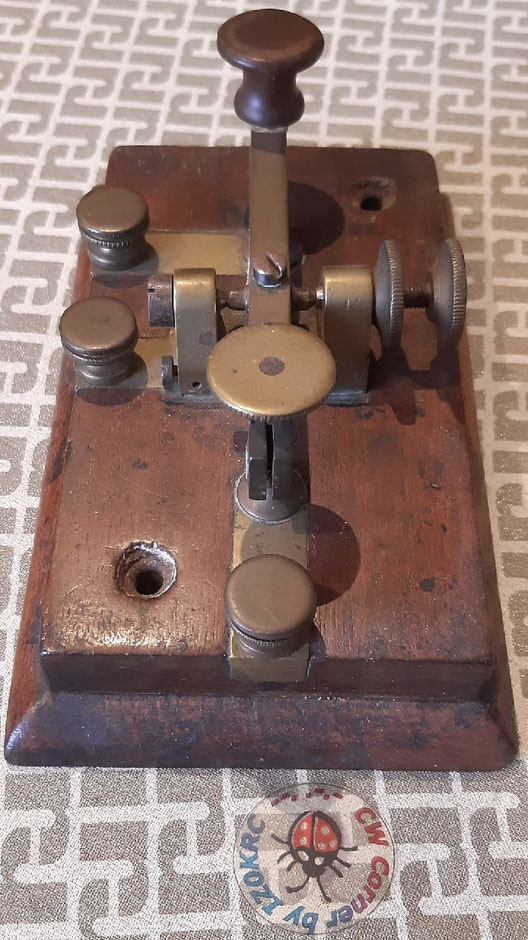
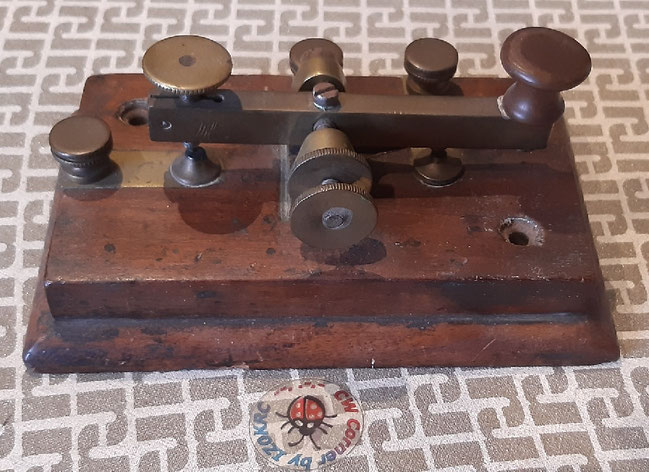
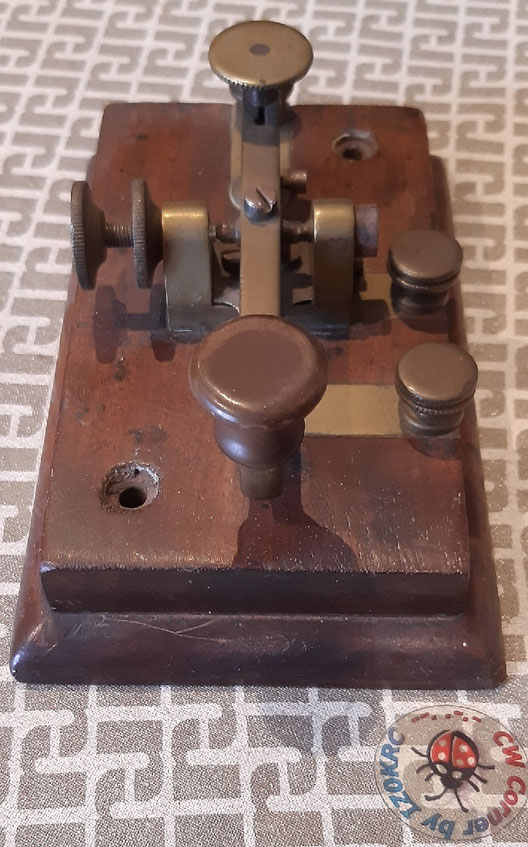
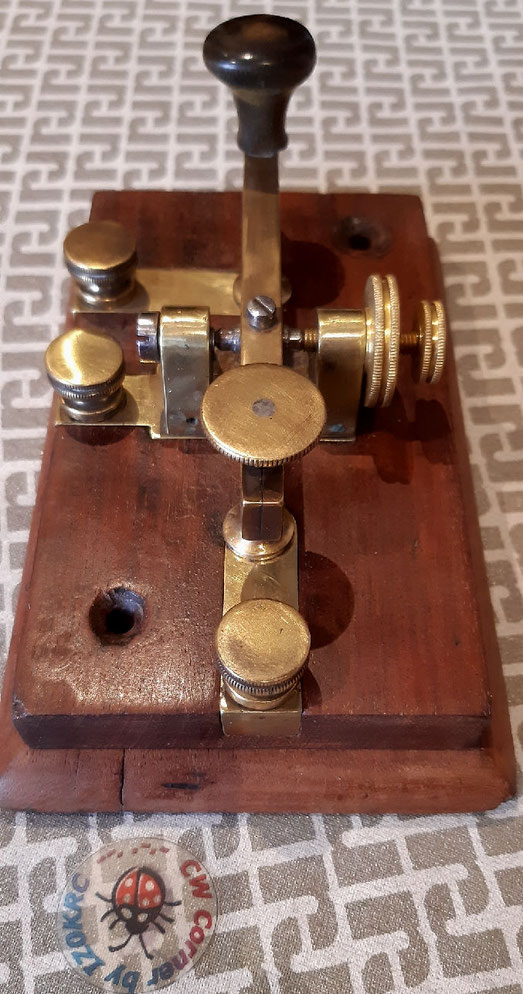
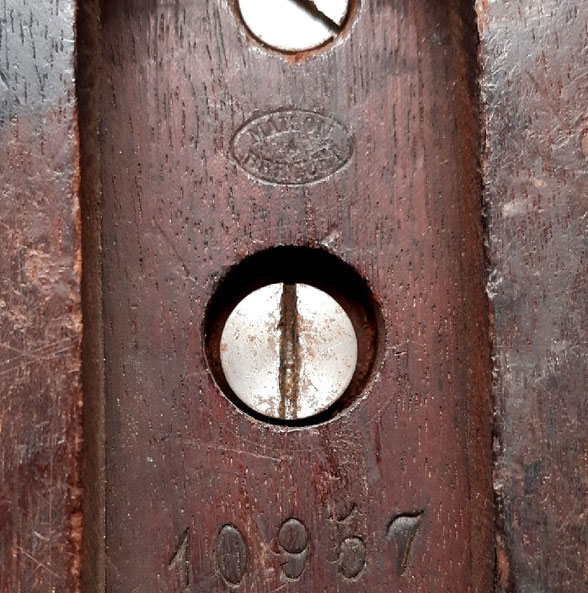
Tasto postale Breguet con molla piatta, secondo modello
TK.FR.003
Classico tasto telegrafico postale Francese Breguet.
Classic French postal telegraph key Breguet
11 Novembre 2021 - Update -- Nov 2
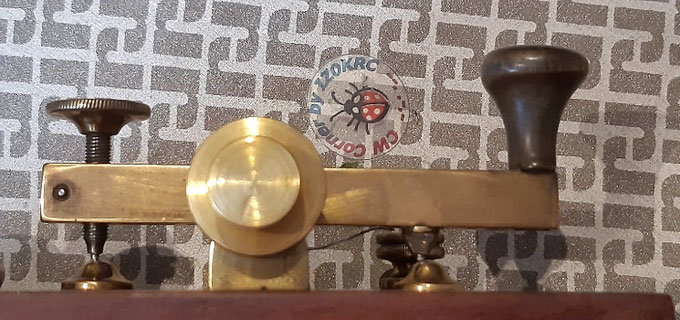
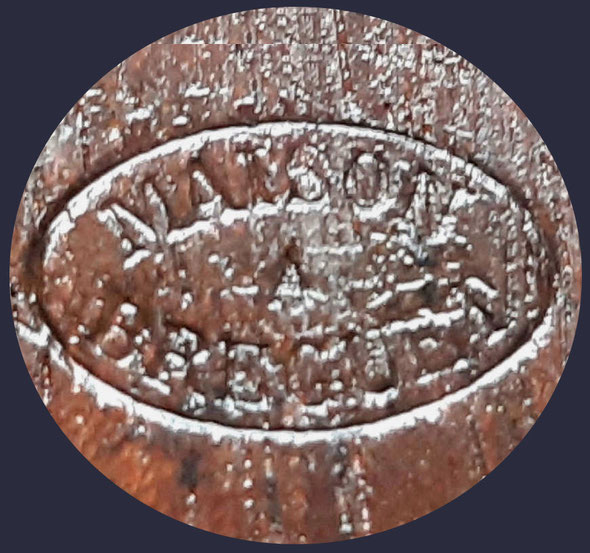
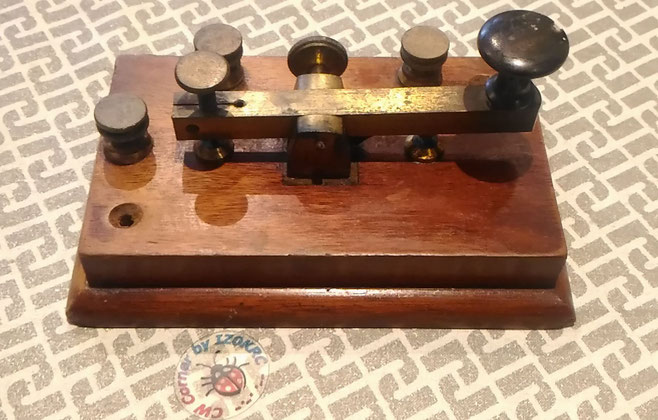
Tasto Postale, VINAY
TK.FR.004
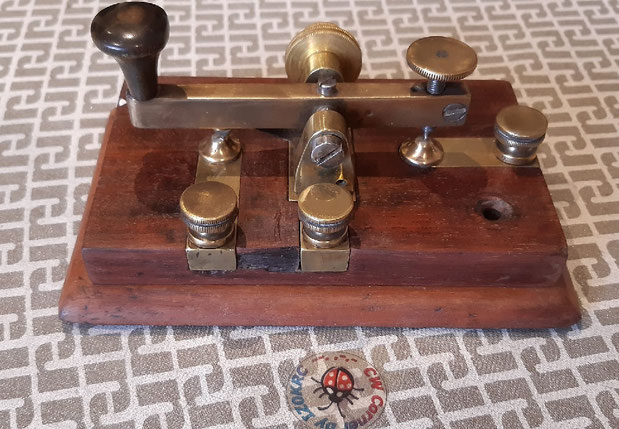
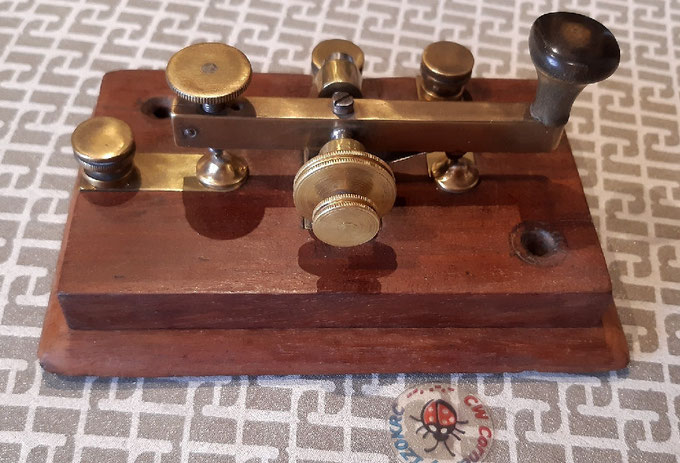
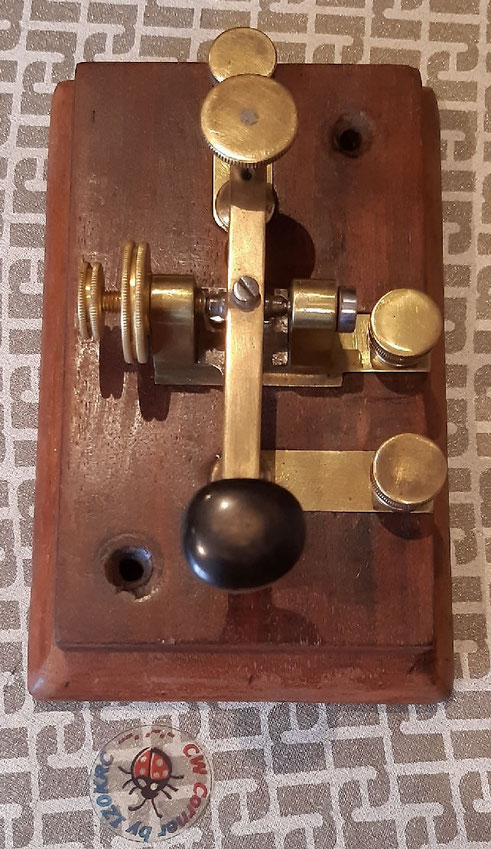
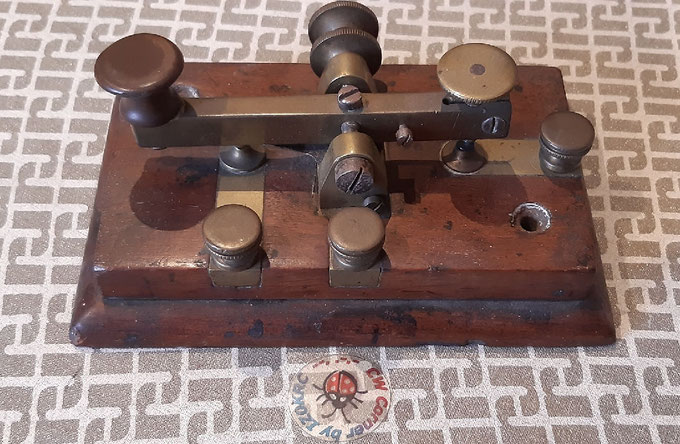
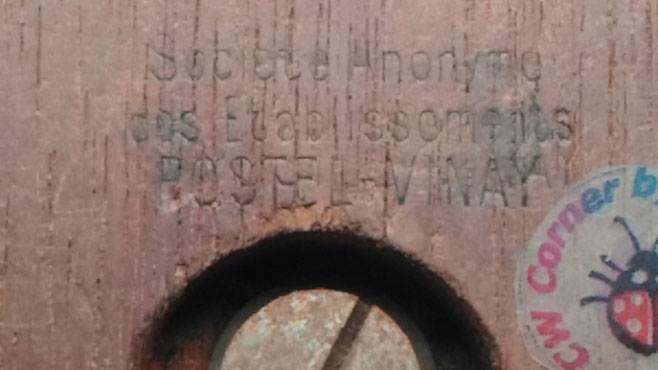
Vinay è stata una delle prime case costruttrici di apparecchiature telegrafiche di Francia. La sua sede era a Parigi ed il proprietario era Pierre Vinay (1828 - 1872).
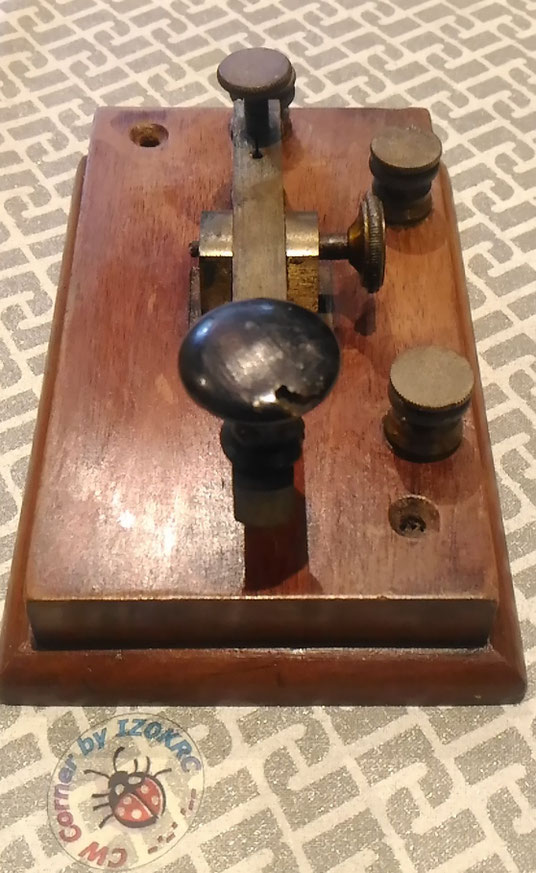
La chiave sotto esposta era in uso agli uffici telegrafici. Ipotizzo che si tratta di un secondo modello prodotto da Vinay.
La prima chiave, di proprietà di Chris F9WT è stata prodotta conservando dei lineamenti finemente lavorati. Una lavorazione che richiede tempo e cura nella produzione, ( clicca qui per vedere la chiave di Chris ).
Il secondo modello, la chiave sotto esposta ha le forme della leva più lineari, ottenibile con un minor tempo di produzione, mantiene ancora le prime direttive postali di produzione. La chiave ha la molla a balestra per il ritorno della leva principale in posizione di riposo, senza possibilità di regolazione al pari delle chiavi Camelback prodotte proprio nella Mittel Europa nel medesimo periodo . Stimo il periodo di produzione di questa chiave Vinay tra la fine dell'800 ed i primi del '900.
Vinay was one of the first manufacturers of telegraph equipment in France. Its headquarters were in Paris and the owner was Pierre Vinay (1828-1872).
The key shown below was used in telegraph offices. I assume it is a second model produced by Vinay.
The first key, owned by Chris F9WT, was produced while retaining its finely crafted features. This process requires time and care in production (click here to see Chris's key).
The second model, the key shown below, has more linear lever shapes, which were achieved with a shorter production time, and still retains the first postal production guidelines. The key has a leaf spring to return the main lever to its rest position, with no adjustment option, unlike the Camelback keys produced in Central Europe during the same period. I estimate the production period of this Vinay key to be between the late 19th and early 20th centuries.
25 Nov. 2018
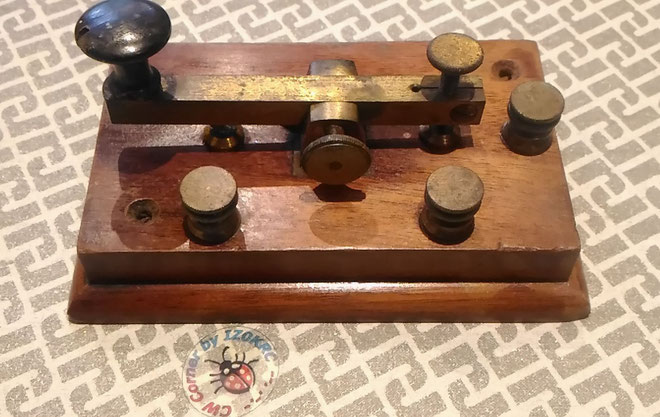
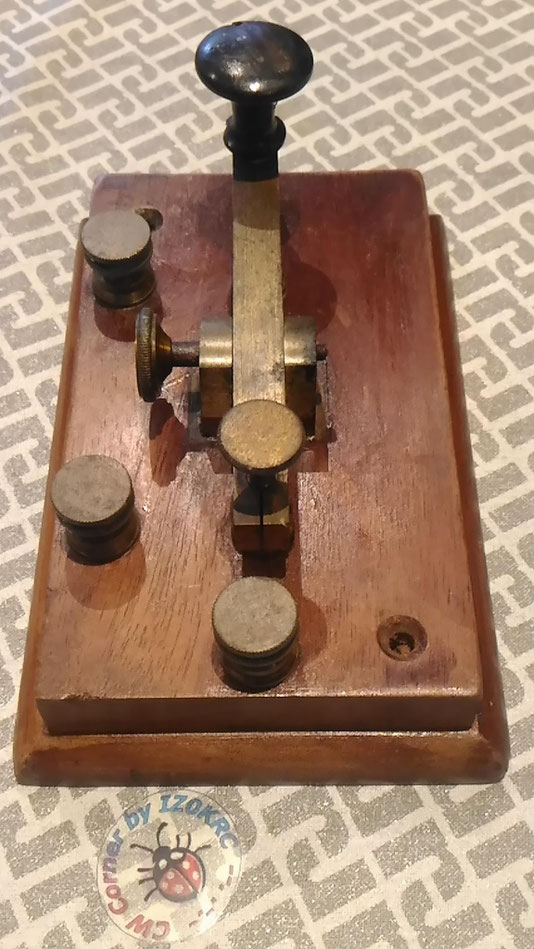
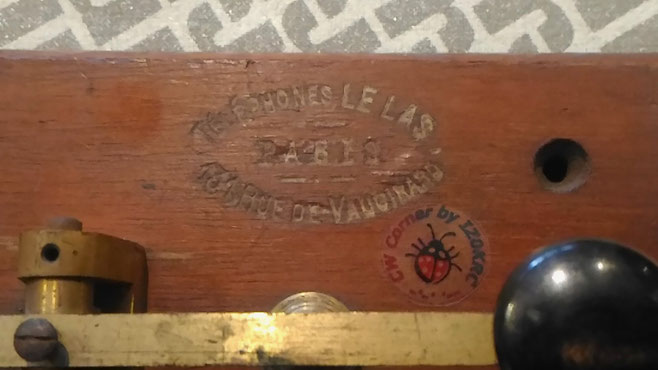
Tasto Postale, LE LAS - Paris
TK.FR.005
La Società Le Las nasce a Parigi nel 1909 per la produzione di materiale di precisione per le comunicazioni.
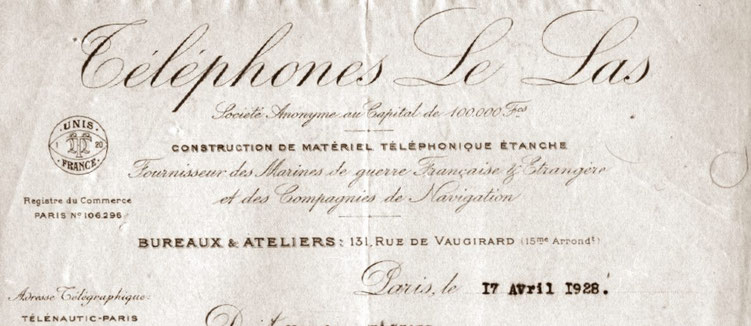
Come si può vedere da un estratto di un documento dell'epoca sotto esposto, la Società forniva strumentazione per il Ministero della Guerra e le compagnie di navigazione, ed agli uffici telegrafici e telefonici del paese.
The Le Las Company was founded in Paris in 1909 to produce precision communications equipment.
As can be seen from an excerpt from a contemporary document below, the company supplied equipment to the Ministry of War and shipping companies, as well as to the country's telegraph and telephone offices.
La Società Le Las è ancora attiva oggi, produce ancora oggi per lo più apparati telefonici, per Internet, oltre che strumentazione di laboratorio ed altro, clicca qui per andare direttamente al sito ufficiale della Società Le Las
The Le Las Company is still active today, still producing mostly telephone and Internet equipment, as well as laboratory equipment and other equipment, click here to go directly to the official website of the Le Las Company
25 Novembre 2018
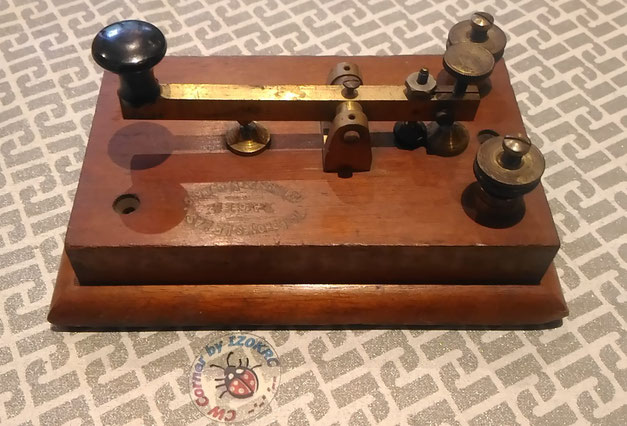
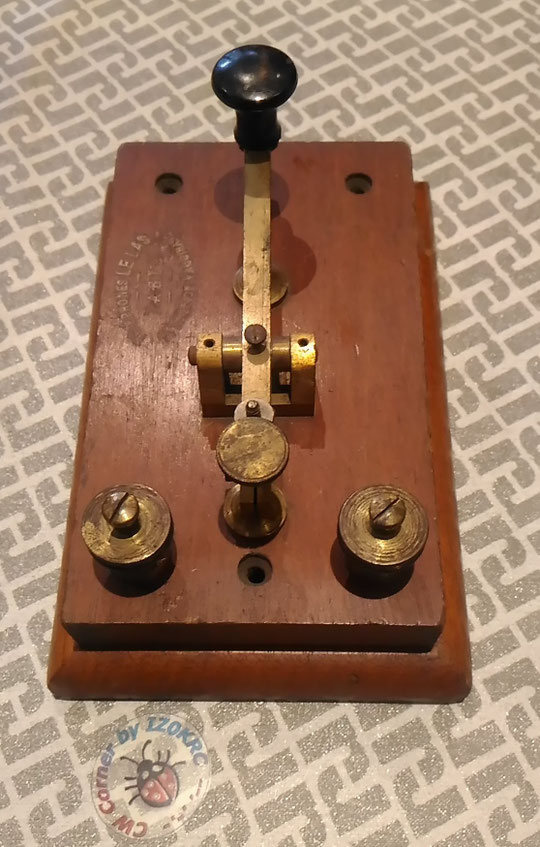
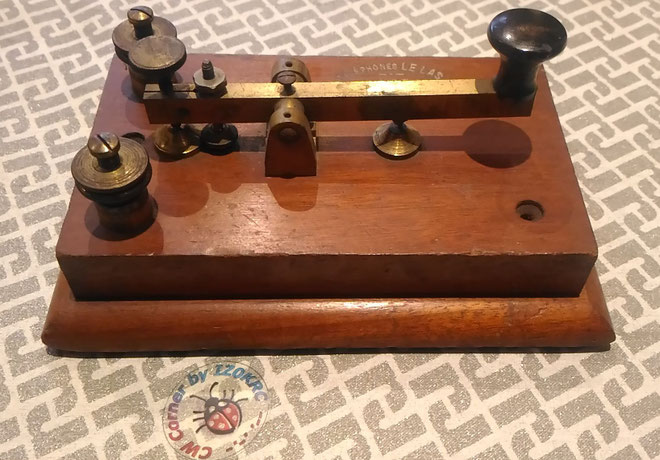
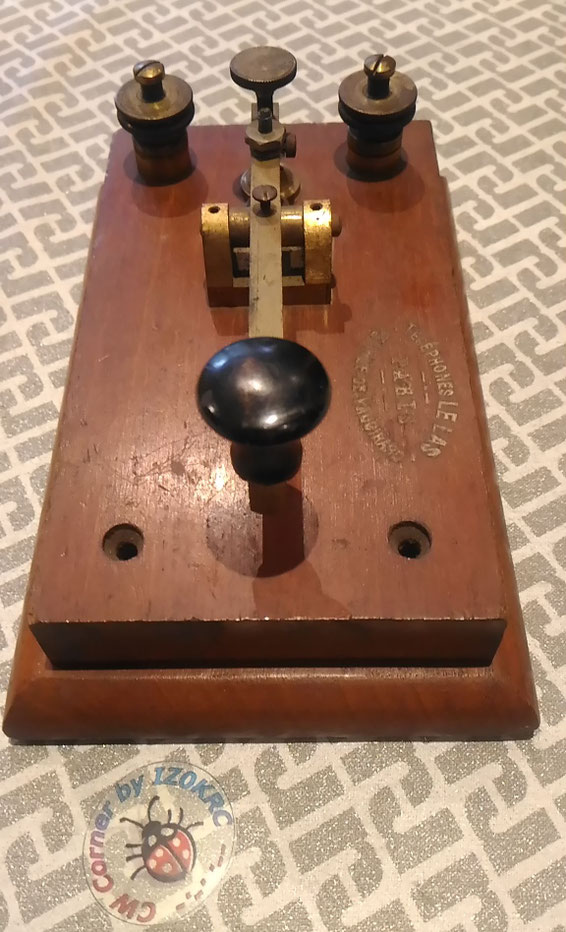
Antico tasto Postale, RENE' PESTY.
TK.FR.006
Antico tasto telegrafico Francese marcato "Renè Pesty - Paris". Anno di produzione primi del 900
S/N 23 utilizzato negli uffici postali Francesi.
Da restaurare.
Antique French telegraph key marked "Renè Pesty - Paris." Manufactured in the early 1900s.
S/N 23, used in French post offices.
Requires restoration.
2012
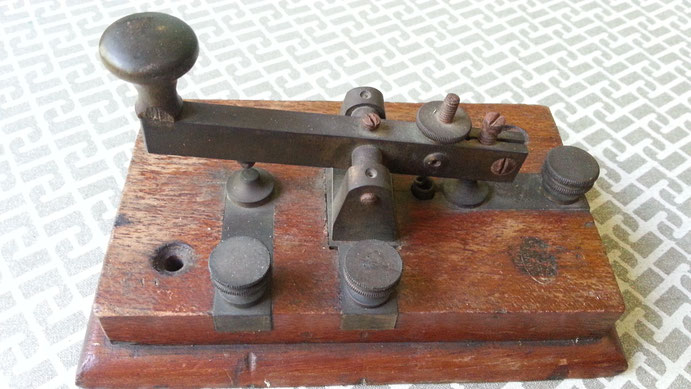
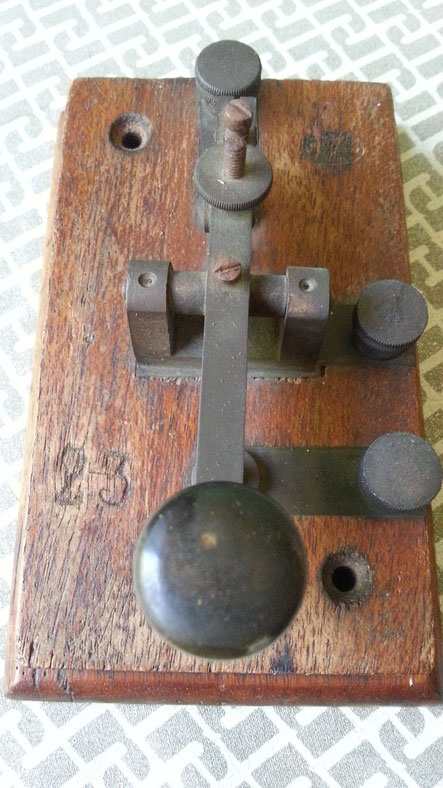
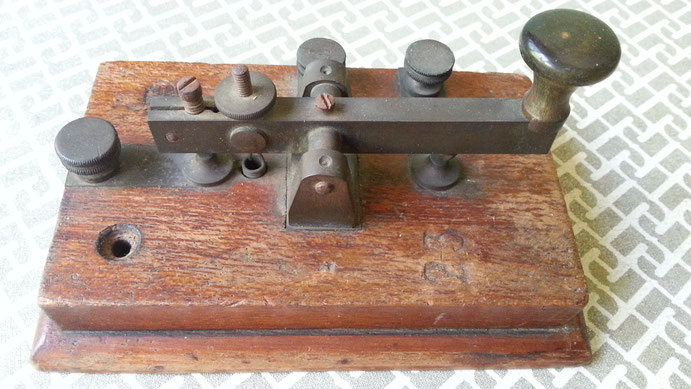
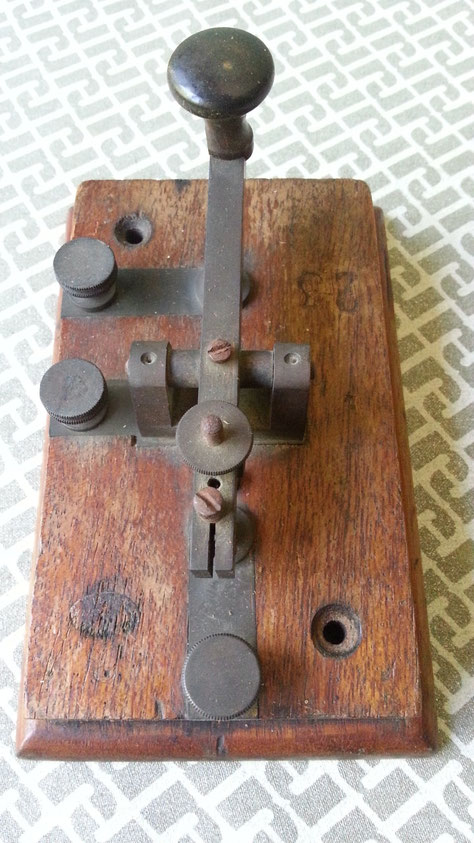
Tasto postale Boulay et C.ie - Paris
TK.FR.007
La Società Boulay aveva sede in via Montmartre, 18. Poco si conosce della sua storia, quel poco che sono riuscito a trovare è tutto contenuto nell'elenco dell'esposizione Universale di Vienna del 1873, oltre un brevetto depositato per un modello di pila elettrica. Gli ambiti di produzione della Boulay sono quindi l'elettronica applicata agli impianti elettrici domestici e industriali, alla distribuzione dell'elettricità e all'illuminazione elettrica, alla produzione di motori elettrici per le automobili. Ebbene si, avete letto bene, la Boulay produceva auto elettriche 150 anni prima del nuovo avvento delle moderne auto elettriche. Ci tengo a precisare che nell'elenco della loro produzione vi è riprotato esattamente apparecchiature e tasti telegrafici per il sistema di morse.
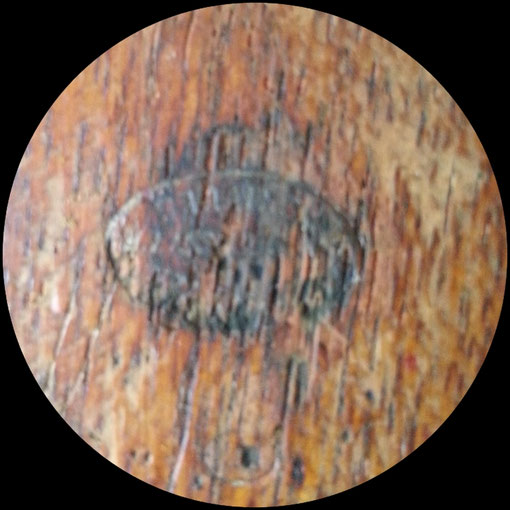
Il tasto è un classico tasto postale, simili agli altri postali sopra esposti. Il disegno e la molla piatta di contrasto lo fanno collocare intorno al 1880 come anno di produzione. Sotto si può notare dalle foto il tipico timbro sotto la base, Boualy et Cie - Paris (Società Boulay Parigi).
Un aggiunta relativa a questo tasto è la modifica che qualcuno ha effettuato su di esso. Mi sono chiesto l'utilità di tale modifica? Ho chiesto a vari amici collezionisti di analizzare le varie ipotesi, la più accreditata è quella che sotto spieghero.
Tagliare il braccio principale per inserire una cerniera che permette il movimento orizzontale dello stesso, al lato destro del braccio vi collocata una lama di acciaio armonico che spinge lo stesso verso destra in modo da toccare automaticamente a riposo il pilone con la vite di contatto per chiudere il circuito.
Uno semplice ma efficace stratagemma per sopperire alle dimenticanze dell'eventuale operatore di porre in chiusura il circuito morse, evitando di lasciarlo fuori servizio.
al link un breve video che dimostra il funzionamento del sistema: https://youtu.be/slHKd3Ohi2o
Si anche analizzata la fattura della modifica al braccio e le aggiunte sulla base (pilone e vite di contatto) sono una escuzione eccellente che farebbero pensare ad una modifica eseguita in un officina specializzata, forse direttamente dalla fabbrica per risolvere il problema di chiusura del circuito morse su un tasto ordinario.
The Boulay Company was headquartered at 18, rue Montmartre. Little is known about its history; the little I could find is all contained in the list of items from the 1873 Vienna World's Fair, along with a patent filed for an electric battery. Boulay's production areas included electronics applied to domestic and industrial electrical systems, electricity distribution and electric lighting, and the production of electric motors for automobiles. Yes, you read that right: Boulay was producing electric cars 150 years before the advent of modern electric cars. I'd like to point out that their production list accurately depicts telegraph equipment and keys for the Morse code system.
The key is a classic postal key, similar to the other postal keys shown above. The design and the contrasting flat spring place it around 1880 as the year of production. In the photos below, you can see the typical stamp under the base: Boualy et Cie - Paris (Boulay Company Paris).
In addition to this key is the modification someone made to it. I wondered what the point of this modification was. I asked several collector friends to analyze the various hypotheses, the most credible being the one I'll explain below.
The main arm was cut to insert a hinge that allows for its horizontal movement. On the right side of the arm, a spring steel blade was placed that pushed it to the right so that it automatically touched the pylon with the contact screw when at rest, closing the circuit.
A simple but effective trick to compensate for any operator's forgetfulness to close the Morse code circuit, thus avoiding leaving it out of service.
Here's a short video demonstrating how the system works: https://youtu.be/slHKd3Ohi2o
Also, having analyzed the workmanship of the arm modification and the additions to the base (pillar and contact screw), they are excellently executed, suggesting a modification performed in a specialized workshop, perhaps directly from the factory to resolve the problem of the Morse circuit closing on a standard key.
10 Febbraio 2022
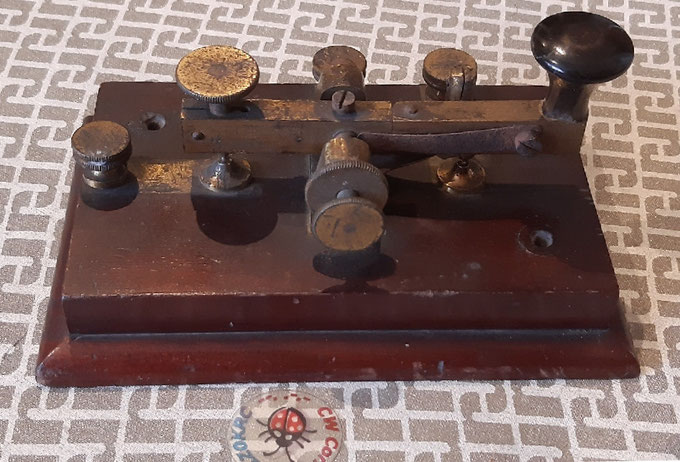
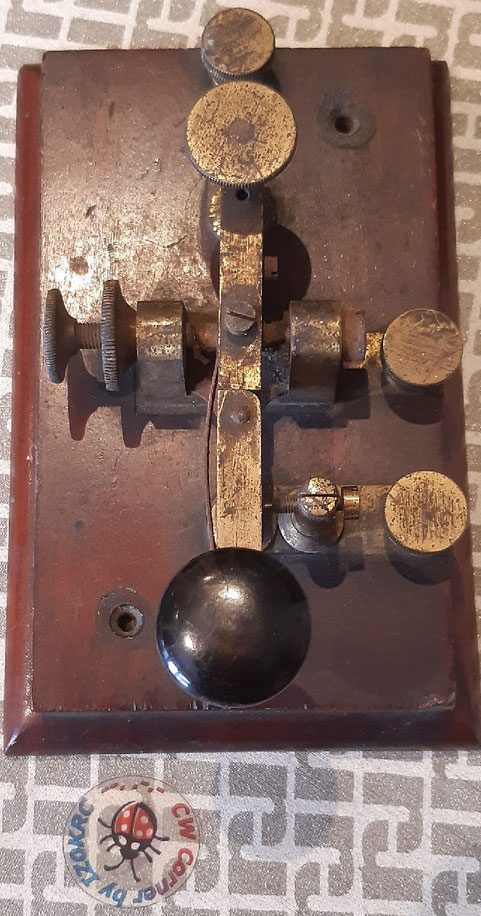
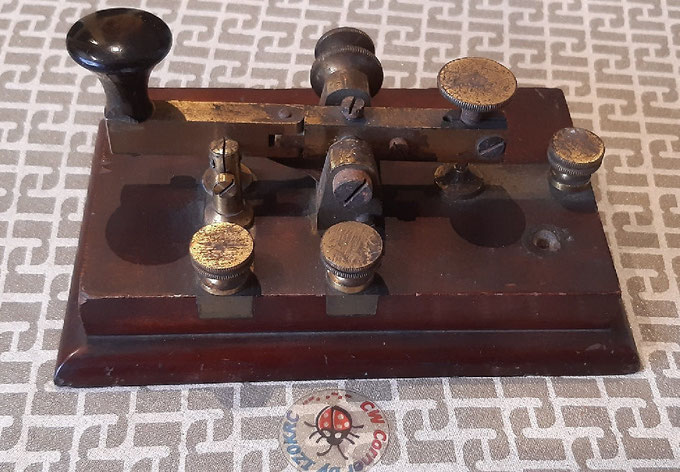
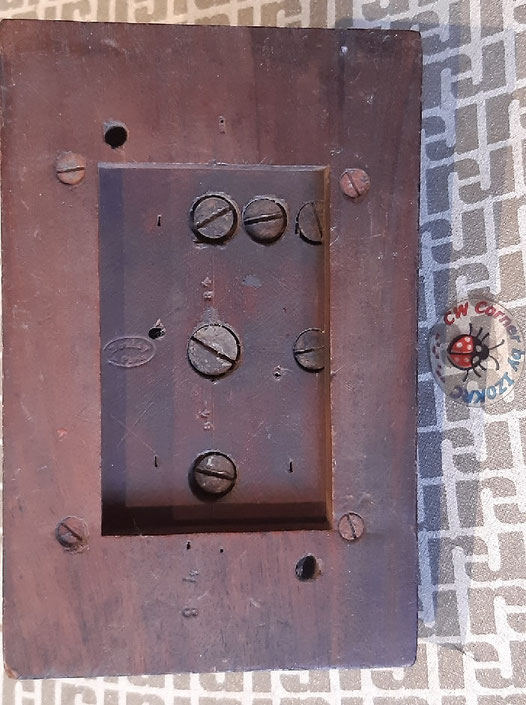
Tasto telegrafico DYNA, primo modello - 1925.
TK.FR.008
Il marchio Dyna nasce a Parigi nel 1921 dal suo fondatore André CHABOT.
CHABOT sarà la Società che poi commercializzerà i prodotti con il marchio DYNA.
Sotto quest marchio si produranno molte cose, tra cui diversi tipi di tasti telegrafici per i servizi postali o militari, infine verso gli anni 80 avvieranno per la produzione alcuni prodotti dedicati ai Radioamatori.
Tutte queste informazioni le ho trovate grazie a F9WT Christian al seguente sito :
http://www.uft.net/articles.php?lng=fr&pg=227&mnuid=173&tconfig=0
Ringrazio Christian F9WT per aver condiviso con la comunità Radioamatoriale le sue ricerche.
Il modello sotto esposto è stato il primo manipolatore prodotto da questo marchio.
Egli non si trova nel primo catalogo edito nel 1938.
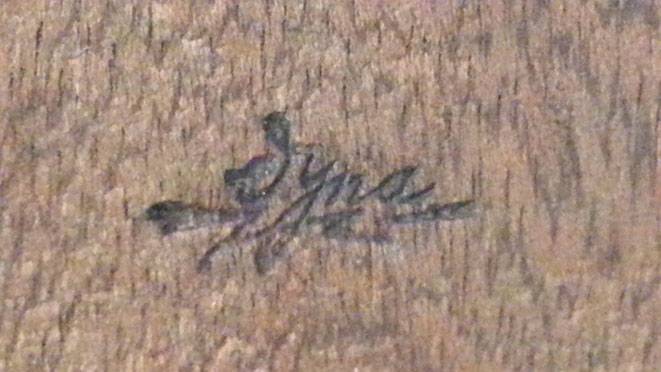
Il tasto porta sotto la base di Legno inciso il logo DYNA, viene inserito a catalogo nel 1932, con una leggera modifica: la vite pivottante del braccio principale non è bloccato da una vite di serraggio, ma con un contro dado zigrinato.
The Dyna brand was founded in Paris in 1921 by André CHABOT.
CHABOT would later market its products under the DYNA brand.
Under this brand, many products were produced, including various types of telegraph keys for postal and military services. Finally, in the 1980s, they began producing some products for amateur radio.
I found all this information thanks to F9WT Christian at the following website:
http://www.uft.net/articles.php?lng=fr&pg=227&mnuid=173&tconfig=0
I thank ChristianF9WT for sharing his research with the amateur radio community.
The model shown below was the first keyer produced by this brand.
It is not included in the first catalog published in 1938.
The key has the DYNA logo engraved under the wooden base. It was added to the catalog in 1932, with a slight modification: the pivoting screw of the main arm is not locked by a clamping screw, but by a knurled counter nut.
10 Febbraio 2012
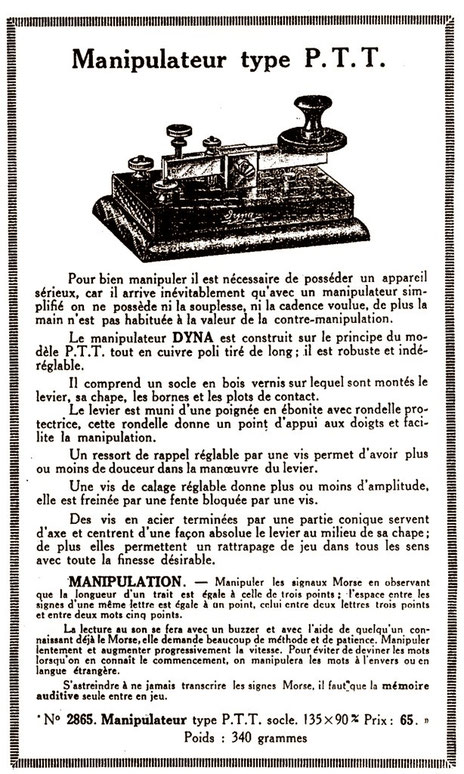
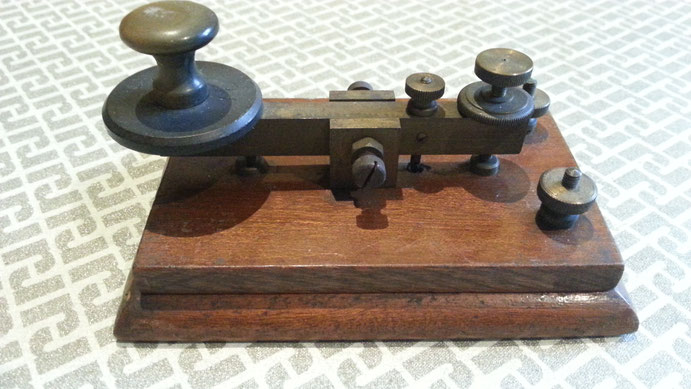
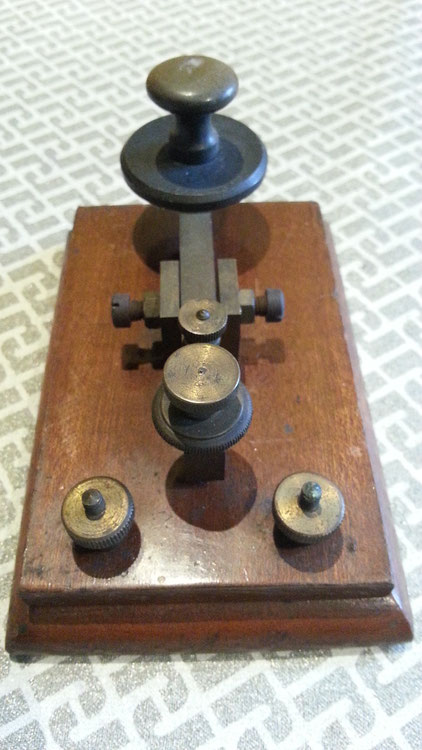
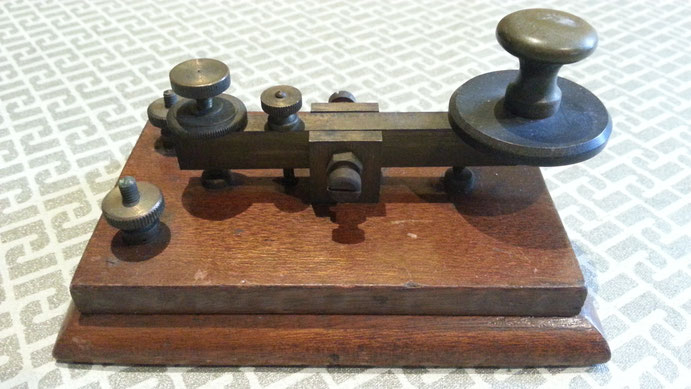
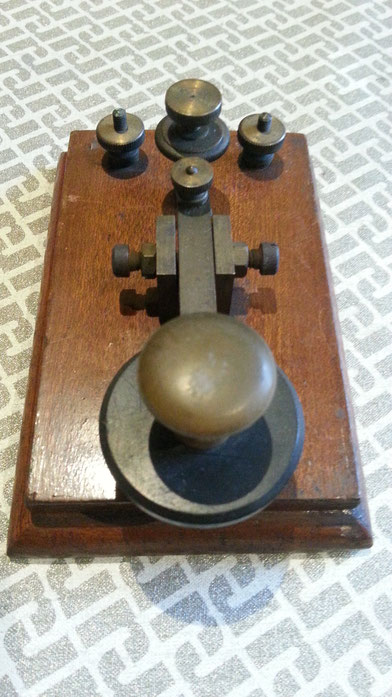
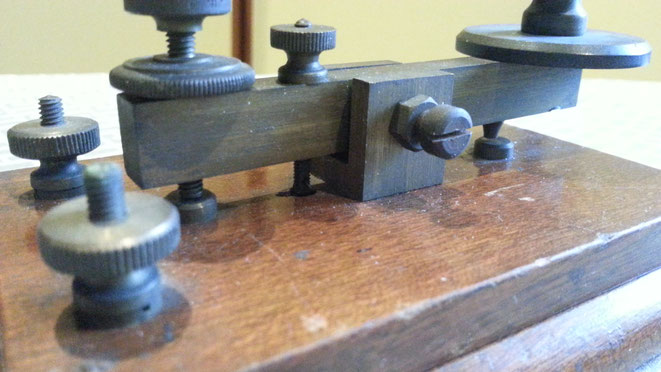
Tasto telegrafico DYNA, secondo modello.
TK.FR.009
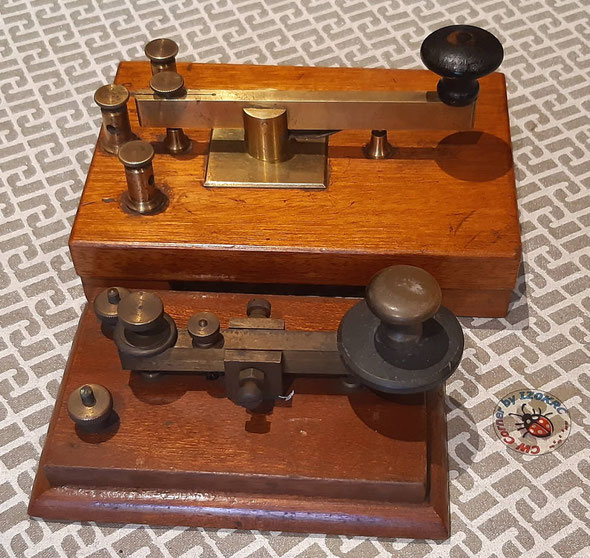
Sotto un altro tasto Dyna.
Il tasto sopra ha l'Hardware in ottone e le teste delle viti di regolazione piatte, mentre il tasto di sotto è sempre un Dyna, ma presenta l'Hardware nichelato e la testa delle viti di bombate.
Confrontando lo stile delle viti e la diversa finitura dell'Hardware ho definito il tasto di sopra come primo modello, mentre il tasto di sotto è il modello più giovane.
Nell'ultima foto si possono vedere le differnze tra i due Dyna.
Un altra differenza è nella base, leggermente più lunga nel modello più vecchio
Below is another Dyna key.
The top key has brass hardware and flat adjustment screw heads, while the bottom key is also a Dyna, but has nickel-plated hardware and rounded screw heads.
By comparing the screw styles and the different hardware finishes, I've identified the top key as the earliest model, while the bottom key is the younger model.
The last photo shows the differences between the two Dynas.
Another difference is the base, which is slightly longer on the older model.
10 Febbraio 2022
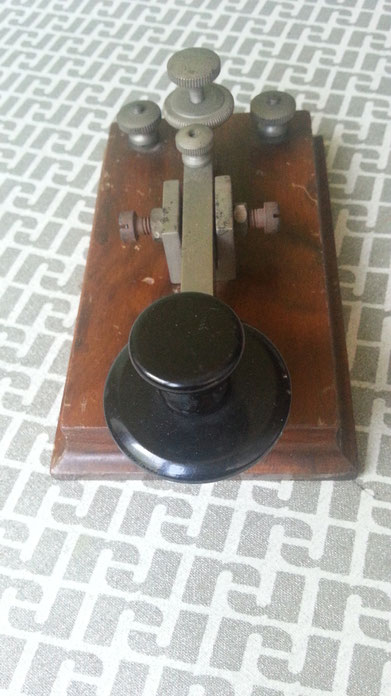
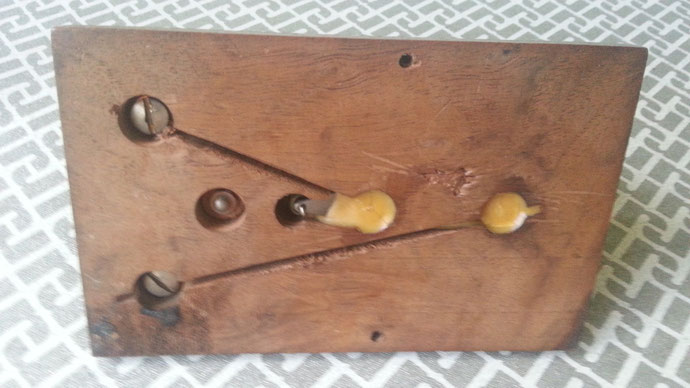
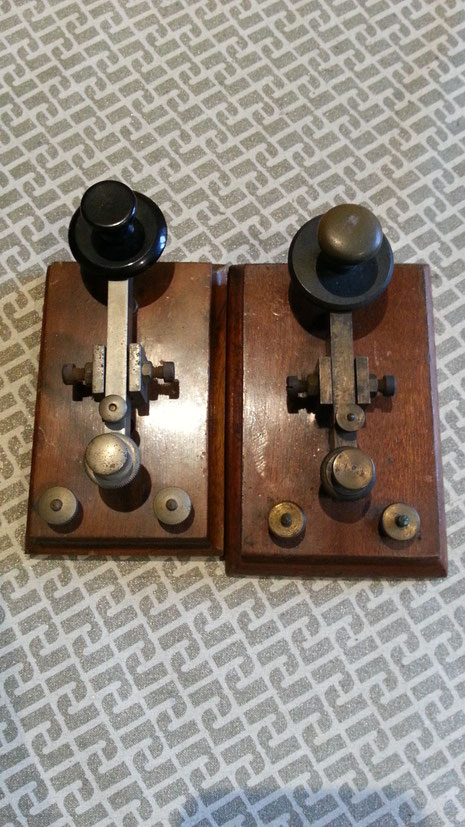
Tasto telegrafico, G. PERICAUD
TK.FR.010
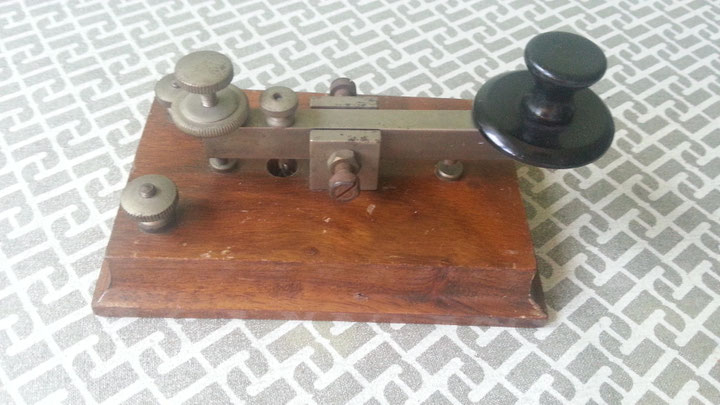
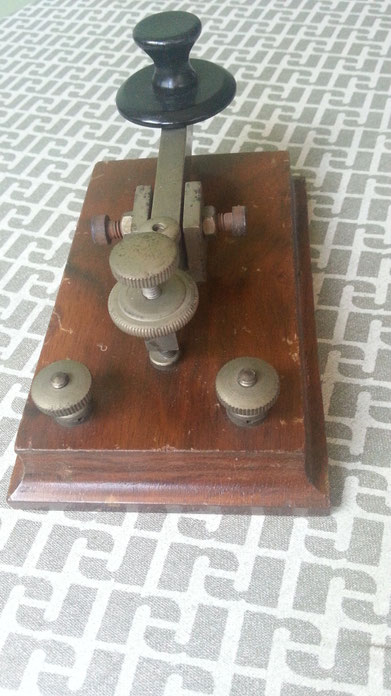
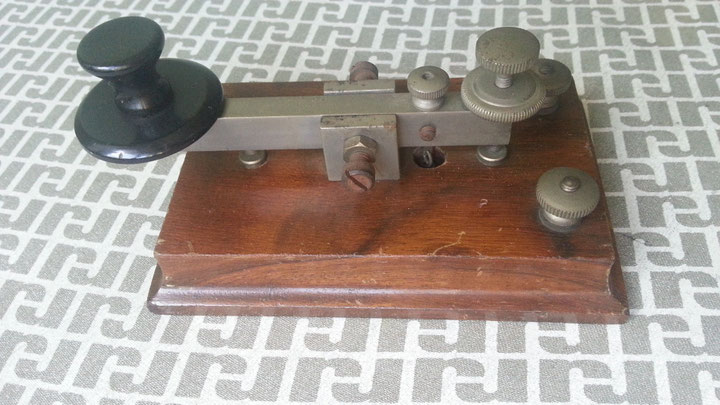
Questo tasto Telegrafico è stato realizzato dalla ditta Georges Pericaud, famosa per aver progettato il primo set di cristalli per la telegrafia senza fili, nell'anno 1909. Dopo la prima guerra mondiale, alla presidenza della ditta ci sarà A. Chabot, cambia la denominazione della ditta che sarà G. Pericuad e Figli.
Nel 1921 A. Chabot fonda il marchio "Dyna" attivo sino al 1977.
La ditta Pericaud era sita in Boulevard Voltaire 85 a Parigi, il suo logo è formato da un gallo, nello sfondo una stella con dei raggi e le iniziali G.P.
Inizialmente produceva strumenti scientifici e attrezzature in uso nei laboratori di fisica, come i tubi Crookes e Geissler, macchine a vapore e quant'altro. Nei primi del '900 entra nel business del wireless, aggiungendo alla produzione anche le apparecchiature telegrafiche e il telefono "senza fili", dopo il 1920 ridimensiona le attività riducendo la produzione alle sole apparecchiature didattiche per i laboratori di fisica.
Il tasto è in legno di Rovere laccato, il pomello è in legno duro laccato nero, la componentistica è in ottone laccato.
Il sistema di contrasto è simile ai primordiali Camelback key, costituito da una molla piatta posta sotto la leva principale, senza possibilità di regolazione alcuna. Ho visto su Internet un altro tasto Pericaud identica a questa, ma con soli due terminali.
Non so dire se questa chiave è un ordine speciale o un modello commercializzato così come lo vedete nelle foto sottostanti, ho però certezza che in un caso o nell'altro il terzo terminale è stato inserito dalle officine Pericaud.
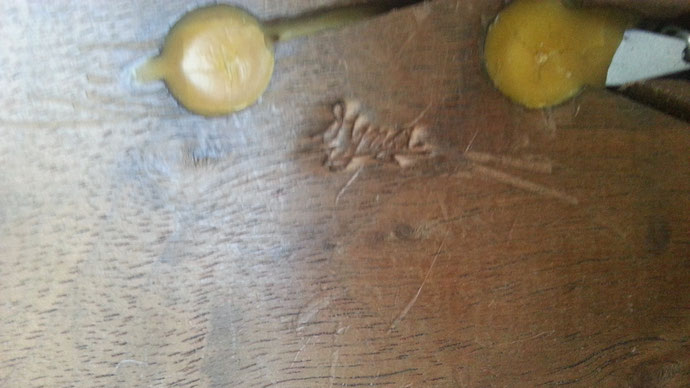
Il foro del terzo terminale, il pilone e le viti sotto e sopra sono in tutto e per tutto identiche alle altre due, inoltre la numerazione dei terminali, nel caso del 3 si vede in modo parziale, in quanto la scritta e quasi coperta dalla cornice del pilone.
La costruzione è stimata nei primi anni 10 del '900, da quando le officine Pericaud hanno iniziato a produrre materiali per la telegrafia senza fili.
Esiste un modello di tasto didattico Pericaud costruito in occasione di un raduno internazionale dei Boy Scouts "Jamboore" organizzato a Parigi nel 1936, visibile nella sezione "Learning Morsekeys", vedi tasto # LR.FR.001.

This telegraph key was made by the Georges Pericaud company, famous for designing the first set of crystals for wireless telegraphy, in 1909. After the First World War, A. Chabot took over as president of the company, and the name was changed to G. Pericaud et Fils.
In 1921, A. Chabot founded the "Dyna" brand, which remained active until 1977.
The Pericaud company was located at 85 Boulevard Voltaire in Paris. Its logo features a rooster with a star with rays in the background and the initials G.P.
It initially produced scientific instruments and equipment used in physics laboratories, such as Crookes and Geissler tubes, steam engines, and other devices. In the early 1900s, it entered the wireless business, adding telegraph equipment and the "cordless" telephone to its production. After 1920, it scaled back its operations, reducing production to only educational equipment for physics laboratories.
The key is made of lacquered oak, the knob is made of black lacquered hardwood, and the components are lacquered brass.
The counteraction system is similar to the early Camelback keys, consisting of a flat spring located under the main lever, with no adjustment options whatsoever. I've seen another Pericaud key online that's identical to this one, but with only two terminals.
I can't say whether this key is a special order or a commercially available model as you see it in the photos below, but I'm certain that in either case, the third terminal was added by the Pericaud workshops.
The hole for the third terminal, the pylon, and the screws at the top and bottom are identical in every way to the other two. Furthermore, the terminal numbering, in the case of the 3, is only partially visible, as the writing is almost obscured by the pylon frame.
The construction is estimated to date to the early 1910s, when the Pericaud workshops began producing wireless telegraphy materials.
There is a model of a Pericaud educational key built for an international Boy Scouts "Jambore" rally held in Paris in 1936, visible in the "Learning Morsekeys" section, see key # LR.FR.001.
18 Agosto 2018
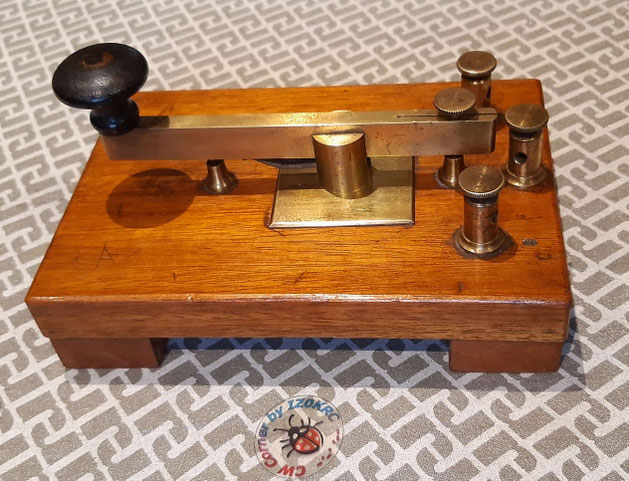
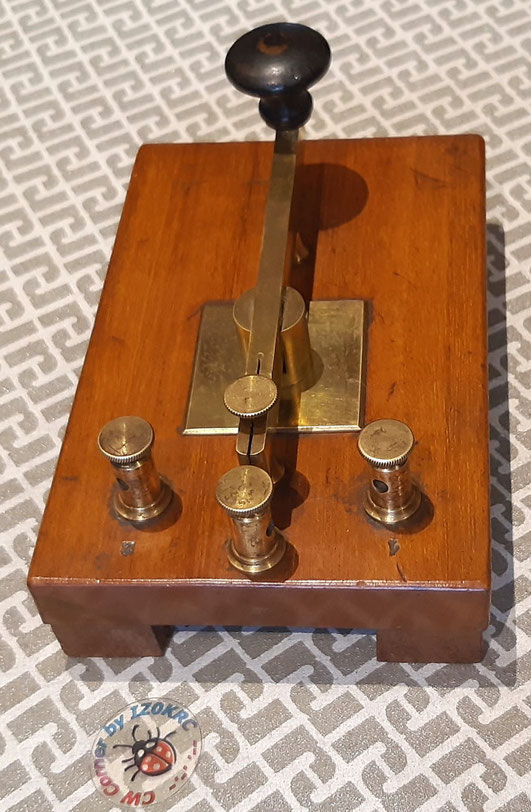
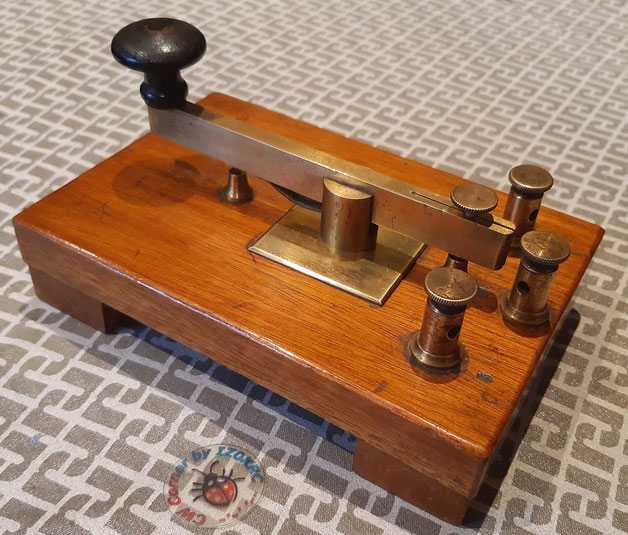
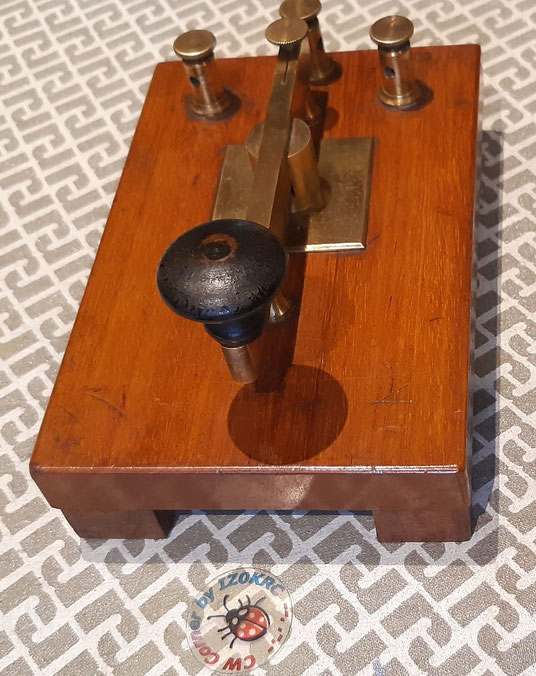
Carpenter Gaiffe e Rochefort, spark french key - 1908 / 10.
ST.FR.001
Tasto prodotto dalla francese C.G.R. Carpentier Gaiffe et Rochefort , Compagnie Générale de Radiotélégraphie. Nasce come Società dal nome collettivo il 07 gennaio 1908, nel 1912 cambia denominazione in "Compagnie Generale Radio-maritime" mantenendo nei simboli sempre il vecchio acronimo C.G.R. In fine acquistata dalla S.F.R acronimo di "Societe Francaise Radio-Electrique", chiudera definitivamente le attività nel 1919.
La C.G.R. nasce con lo scopo di realizzare strumenti wireless per conto dello Stato governativo, principalmente in ambito militare.
La C.G.R. ha prodotto diversi chiavi cosidette "Spark", utilizzate per un breve periodo agli albori della radio telegrafia, utilizzavano dei grandi contatti, uniti a diversi espedienti per eliminare gli archi voltaici che si creavano durante le trasmissioni.
I primi due tasti prodotti dalla C.G.R.erano molto più grandi del modello sotto esposto e utlizzavano lo smormanto a bagno d'olio riuscendo a gestire correnti da 1 sino a 2,5Kw,. Questo modello invece è sprovvisto dello smarzamento a bagno d'olio, ma presenta dei grandi contatti per meglio dissipare il calore prodotto durante le trasmisisoni.
Il presente modello era stato costruito per essere affiancarlo sui trasmettori a scintilla (Spark) della Marina Francese.
This key was produced by the French company C.G.R. Carpentier Gaiffe et Rochefort, Compagnie Générale de Radiotélégraphie. Founded as a joint stock company on January 7, 1908, it changed its name to "Compagnie Generale Radio-maritime" in 1912, retaining the old acronym C.G.R. It was eventually acquired by S.F.R., an acronym for "Societe Francaise Radio-Electrique," which closed its operations permanently in 1919.
C.G.R. was founded to produce wireless instruments for the government, primarily for military purposes.
C.G.R. produced several so-called "Spark" keys, used for a short time in the early days of radio telegraphy. They used large contacts combined with various devices to eliminate the arcs that were created during transmissions.
The first two switches produced by C.G.R. were much larger than the model shown below and used oil-bath damping, capable of handling currents from 1 to 2.5 kW. This model, however, lacks oil-bath damping, but features large contacts to better dissipate the heat produced during transmission.
This model was built to complement the French Navy's spark transmitters.
30 Settembre 2021 up-date 05 Giugno 2026
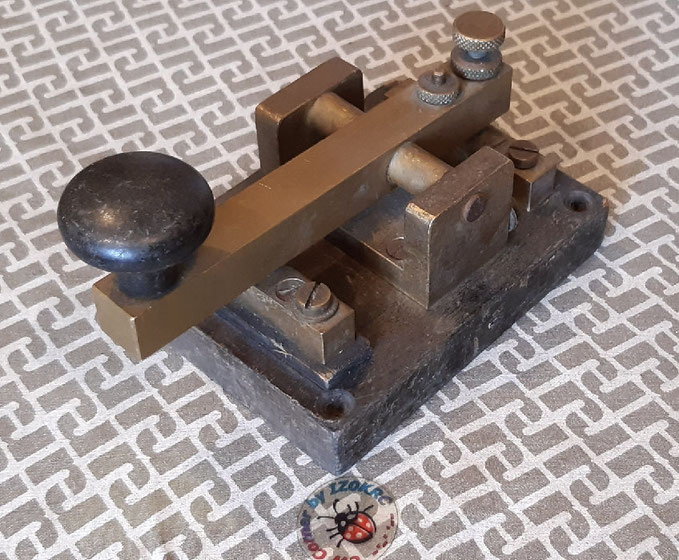
Carpenter Gaiffe e Rochefort, spark french key - 1908 / 10.
ST.FR.002
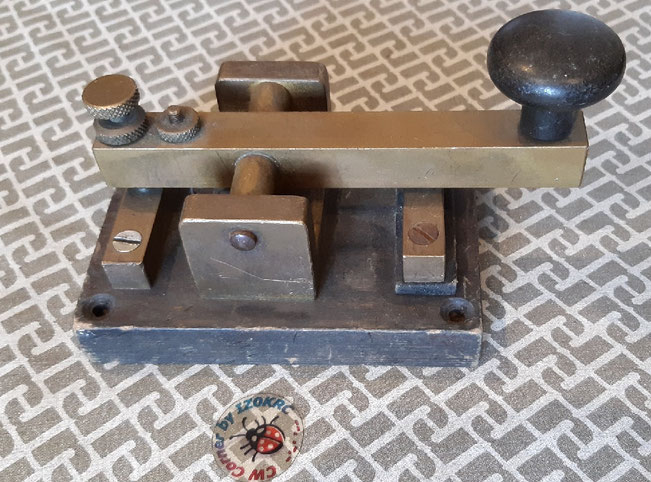
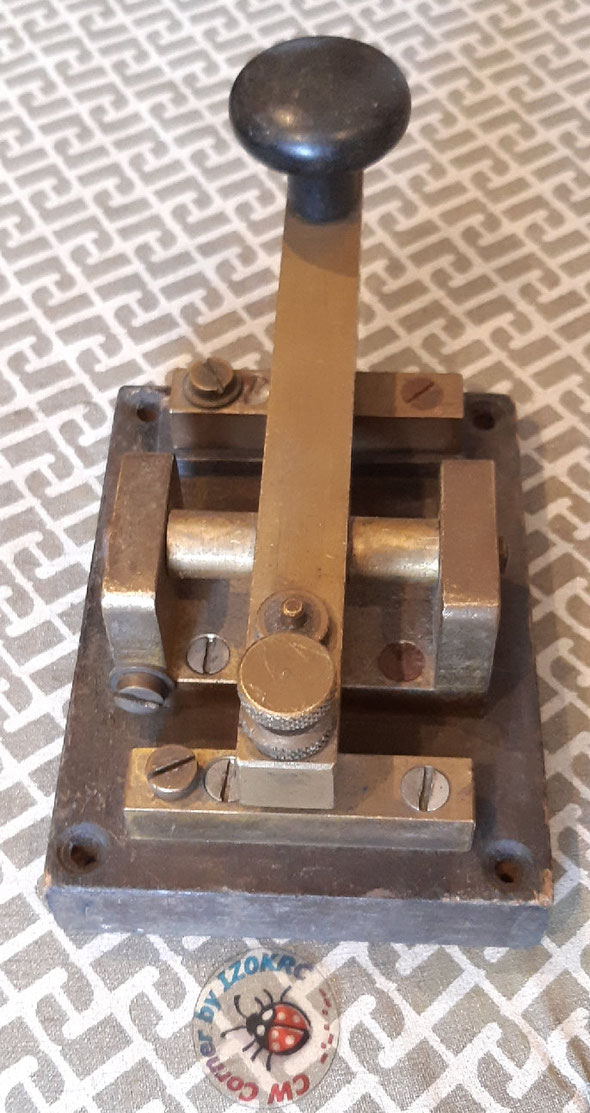
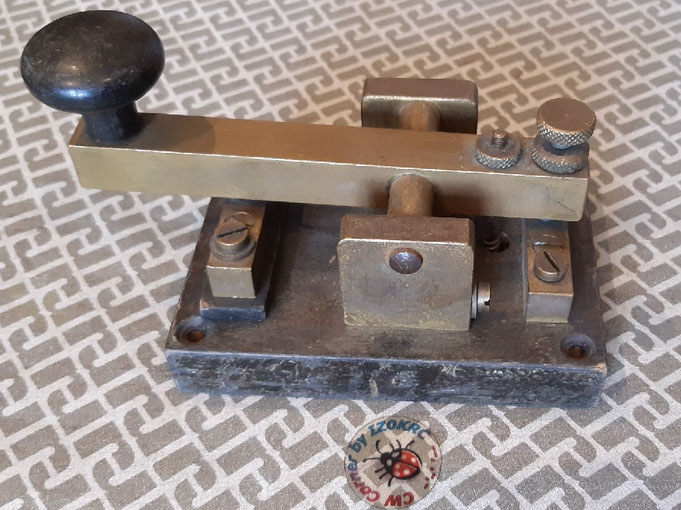
Anche questo tasto telegrafico è stato prodott odalla Società Francese C.G.R. (Compagnie Générale de Radiotélégraphie)
La storia della società C.G.R. è contenuta nella desrczione del tasto sorpa esposto Key n. ST.FR.001-
Anche questo tasto telegrafico definito a scintilla (Spark) è di tipo a secco.
La regolazione dei contatti avviene come ogni comune tasto telegrafico, mentre la resistenza della molla, avvine per un articolato sistema di regolazione che corre tutt osott ola base. La molla si indurisce o si allievia per mezzo di una vite centrale posta nella parte posteriore del tasto (quella che giuarda verso l'operatore).
Utlizza come dissipazione due dischi sovradimensionati, dove alloggiano direttamente le pastiglie di contatto.
POastiglie che solitamente venivano sostitutie regolarmente per via che le scintille prodotte durante la trasmissione "rosicchiavano" di votla in volta una porzione di contatto. Le grandi pastiglie metalliche erano giustificate per l'aumento di volume, come dissipazione del calore prodottto dai vari archi voltaici, effetto dell'elevato voltaggio prodotto dai poderosi trasmettitori ad arco di Poulsen.
This telegraph key was also produced by the French company C.G.R. (Compagnie Générale de Radiotélégraphie)
The history of the C.G.R. company is contained in the description of the key above, Key No. ST.FR.001
This telegraph key, also known as a spark key, is also of the dry type.
The contacts are adjusted like any other telegraph key, while the spring resistance is controlled by a complex adjustment system that runs underneath the base. The spring is stiffened or loosened by means of a central screw located on the rear of the key (the one facing the operator).
It uses two oversized discs for heat dissipation, which house the contact pads directly.
These pads were usually replaced regularly because the sparks produced during transmission would occasionally "gnaw away" a portion of the contact. The large metal pads were justified by the increase in volume, as a dissipation of the heat produced by the various electric arcs, an effect of the high voltage produced by the powerful Poulsen arc transmitters.
05 Giugno 2026
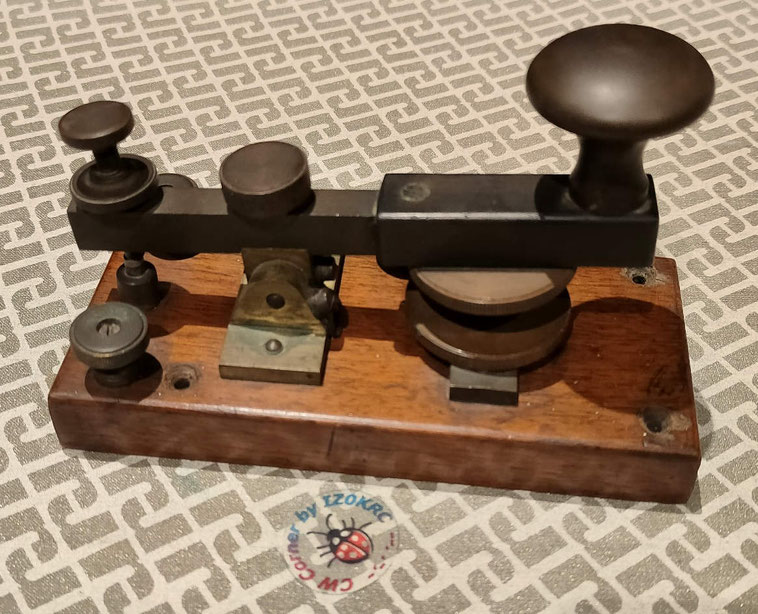
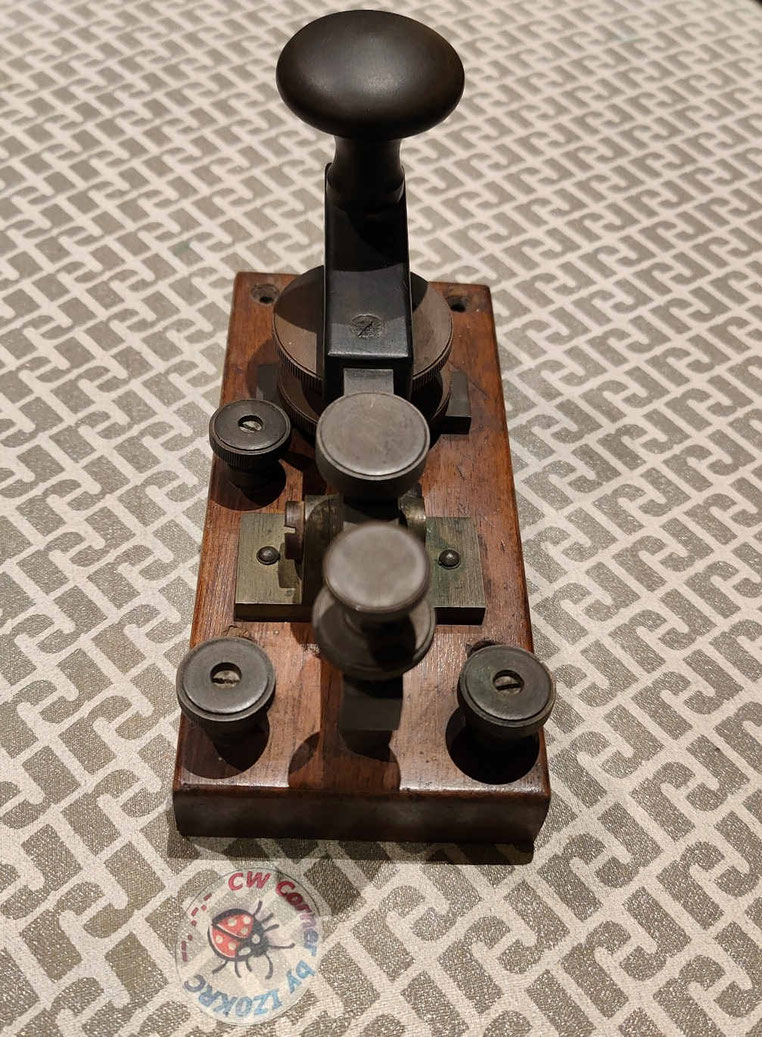
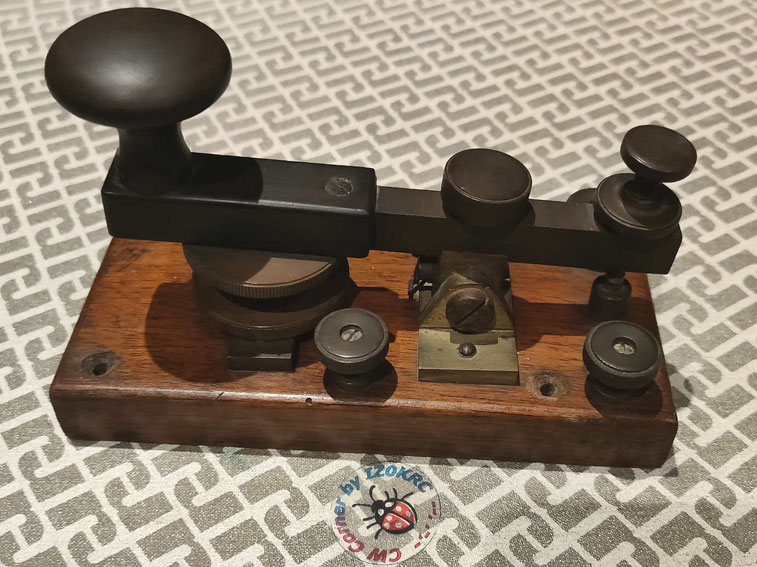
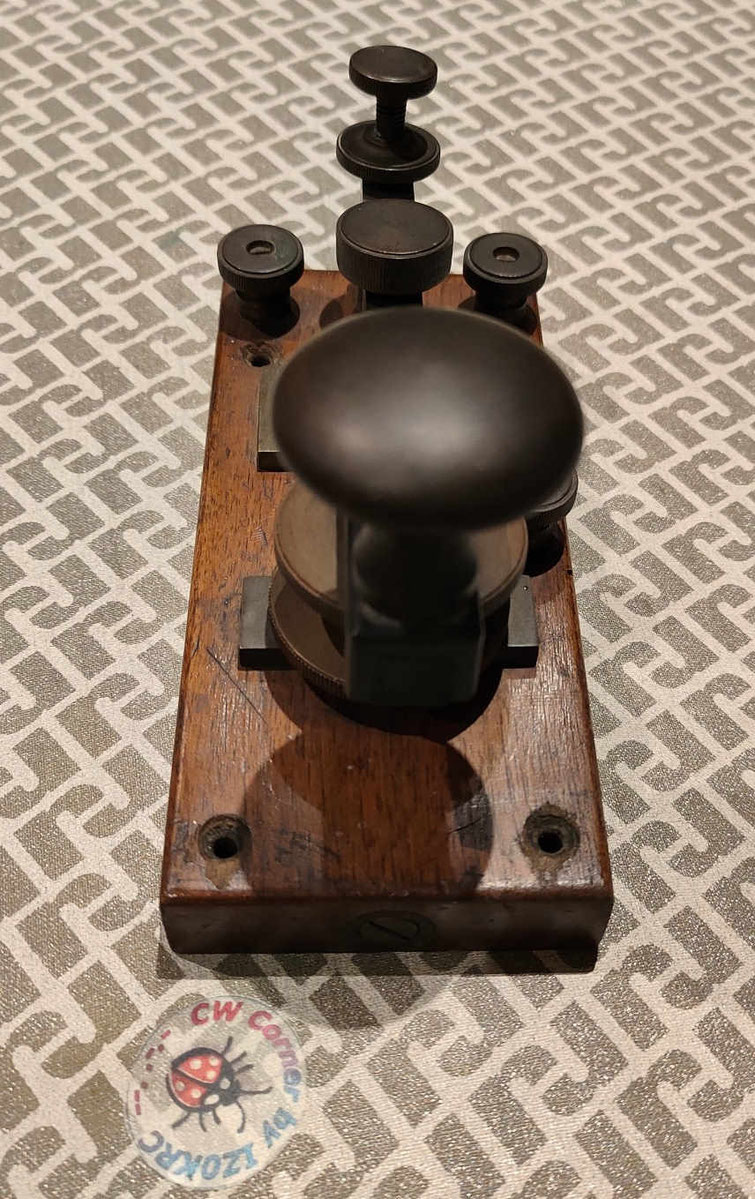
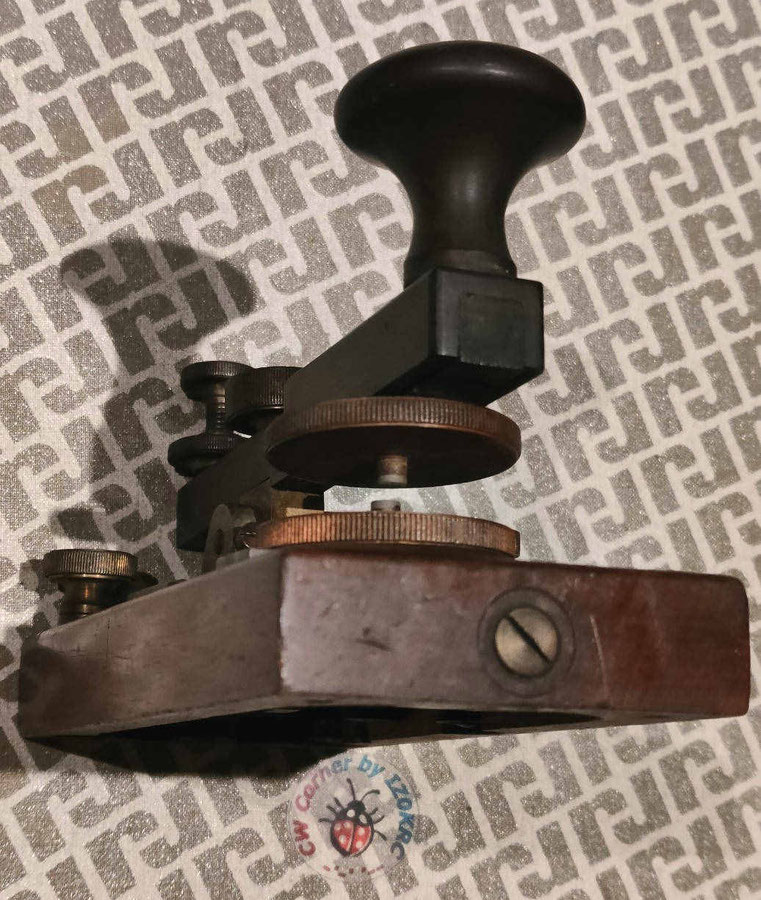
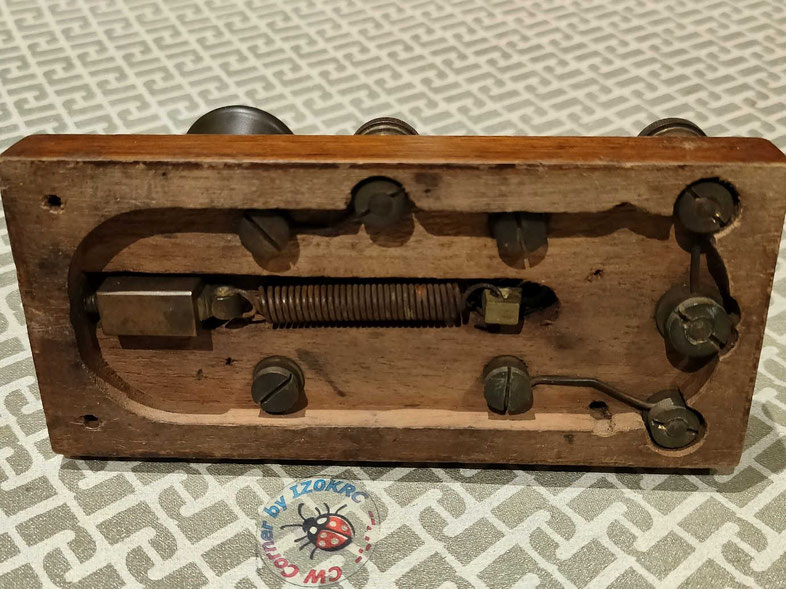
Informazione aggiuntive. Un collezionista Americano mi ha fatto notare che la pastiglia di contatto risulta avere un diametro piccolo per un tasto a scintilla.
Ho così speso ulteriore tempo per ricercare informazioni specifiche sui modelli prodotti dalla Compagnie Générale de Radiotélégraphie. Purtroppo ci sono poche informazioni la fuori, quindi possiamo valutare alcuni aspetti costruttivi della chiave per definire con più certezza l'uso dela tasto.
Il diametro della pastiglia di contatto. Effettivamente non è molto grande, misurata con un calibro il diametro è circa 5 mm,
Seppur piccola di dimensione, rientra nei parametri minimi per le chiavi a scintilla.
Il bi componente del disco dissipatore è in rame, mentre la pastiglia centrale di contatto è in lega di Rame e Cromo, o lega di Rame Cromo e Zirconio (questo particolare è difficile da valutare a vista).
Il fatto che la pstiglia si avviata, rendendo possibile e facile la sua asportazione, fa pensare al sistema utlizzato prorpio nelle chiavi a scintilla per la sostituzuone a seguito di usura.
La protezione della leva principale è in legno di ebano, al tempo utilizzato come isolatore, i nquanto questo tipo di legno non assorbe umidità.
Mi sono chiesto anche io come mai i contatti non hanno un diametro enorme?
Forse perchè erano i tasti prodotti "nella prima ora" ?
Sotto un esempio della scuola Francese della prima ora, dove possiamo osservare il diametro della pastiglia di contatto di ridotte dimensioni.

Forse perchè questi tasti operavano con minimi amperaggi?
Sono dubbi hai quali non so rispondere.
Anche la chiave più piccola che vedi nel sito, ha la pastiglia con il medesimo diametro.
Posso però arrivare alla conclusione che la costruzione e i materiali, corrispondono per l'uso della chiave a scintilla.
Additional information. An American collector pointed out to me that the contact pad is small in diameter for a spark key.
So I spent more time researching specific information on the models produced by the Compagnie Générale de Radiotélégraphie. Unfortunately, there's little information out there, so we can only evaluate some construction aspects of the key to more accurately define the key's intended use.
The diameter of the contact pad. It's actually not very large; measured with a caliper, it's about 5 mm.
Although small in size, it falls within the minimum parameters for spark keys.
The two-component heat sink disc is copper, while the central contact pad is made of a copper-chromium alloy, or a copper-chromium-zirconium alloy (this is difficult to assess visually).
The fact that the pin is screwed in, making it easy to remove, suggests the system used specifically in spark wrenches for replacement after wear.
The main lever guard is made of ebony, which was once used as an insulator, as this type of wood does not absorb moisture.
I also wondered why the contacts aren't enormous in diameter?
Perhaps because they were the keys produced "in the early days" ?
Below is an example from the early French school, where we can see the diameter of the contact pad, which is small.
Perhaps because they operated with minimal amperage?
These are questions I can't answer.
Even the smallest key you see on the site has a pin with the same diameter.
However, I can conclude that the construction and materials are suitable for use with a spark wrench.
15 Giugno 2026
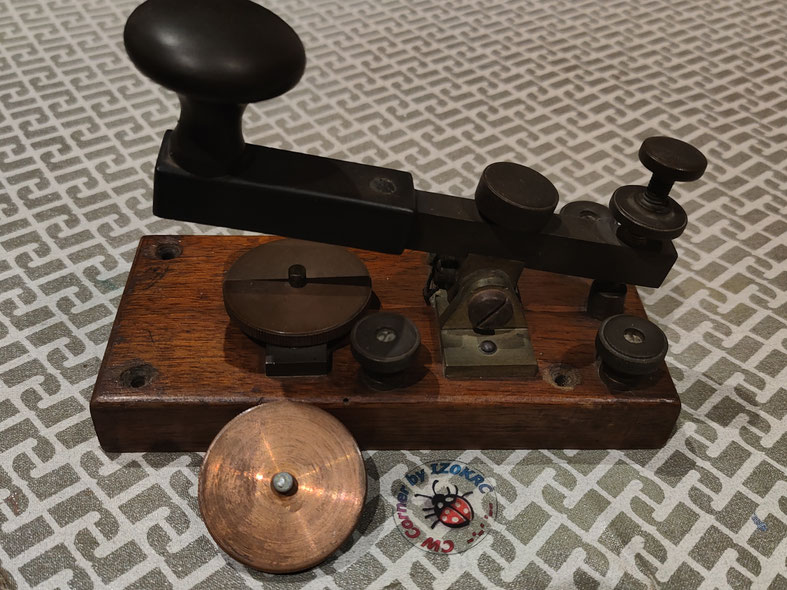
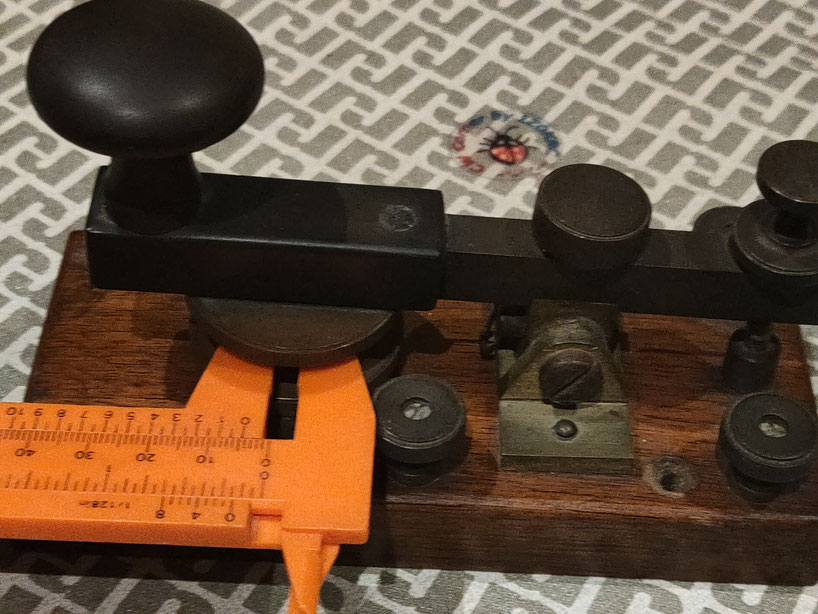
Marconi style wireless French key.
ST.FR.002
Tasto telegrafico acquistato in Francia. Non ho alcuna informazione in merito a questo tasto, sto cercando tra i collezionisti se per caso ve ne sia qualcun altro in collezione. Costruito in maniera superba, tanto da convincermi che non si tratta di un tasto home made, ma di una piccola produzione artigianale.
Preciso che non si tratta assolutamente di un tasto costruito nelle officine Marconi, ma df una produzione che forse ha provato ad entrare nel mercato con un prodotto analogo.
La differenza maggiore tra il Marconi e questo tasto, sta nella disposizione dei terminali, come si può osservare dalla foto gentilmente concessa dall'amico Eliseo IK6BAK.
Telegraph key purchased in France. I have no information about this key; I'm searching among collectors to see if there are any others in their collection. Superbly crafted, it's clear to me that this is not a home-made key, but a small artisanal production.
I should point out that this key was definitely not made in the Marconi workshops, but rather from a manufacturer that perhaps attempted to enter the market with a similar product.
The main difference between the Marconi key and this key is the arrangement of the terminals, as you can see in the photo courtesy of my friend Eliseo IK6BAK.

Il periodo di costruzione coincidente con gli albori della telegrafia per via del progetto realizzato e per il grande contatto, tipico dei tasti cosi detti "spark" prodotti proprio per sopportare le grandi correnti in gioco generate dai motorii ad arco Poulsen.
The construction period coincides with the dawn of telegraphy due to the design and the large contact, typical of the so-called "spark" keys produced specifically to withstand the large currents generated by the Poulsen arc motors.
08 Marzo 2023
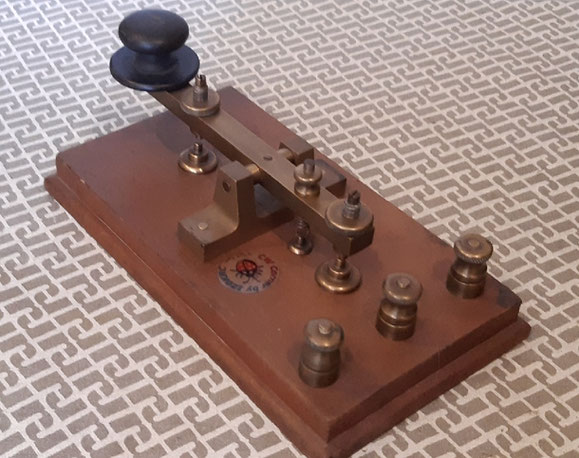
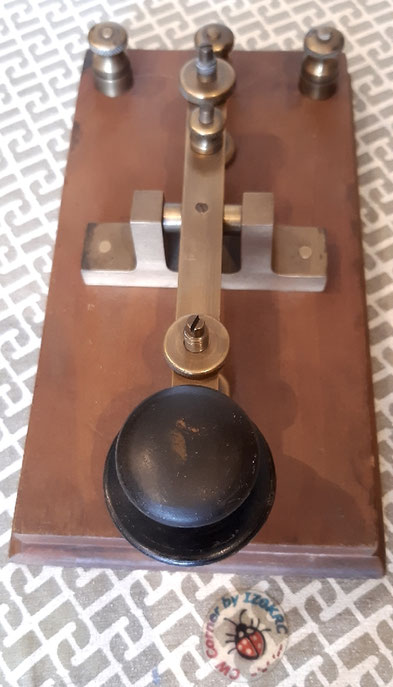
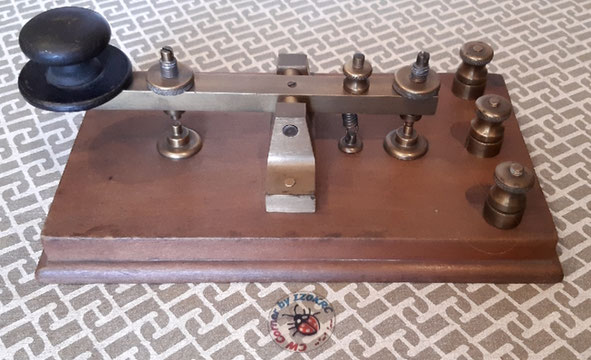
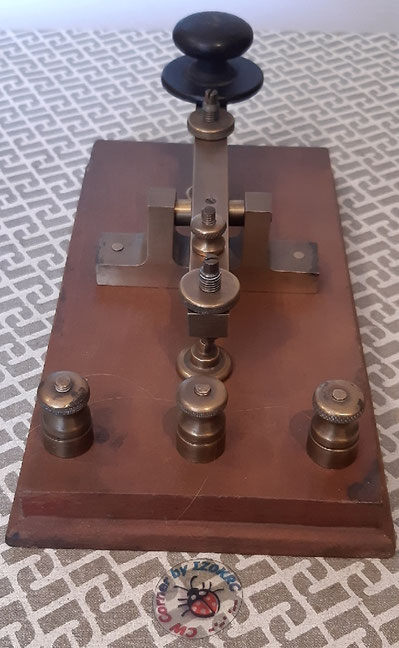
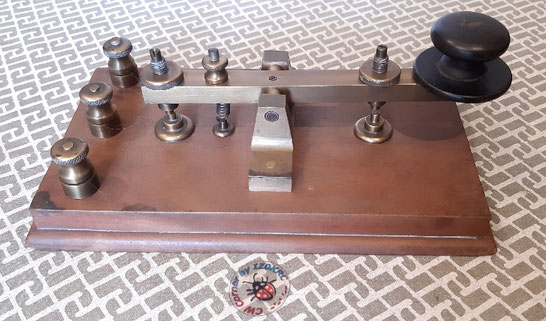
A. GAIFFE, physical/demo telegraph key
FD.FR.001
La società A. Gaiffe è stata fondata a Parigi da Adolphe Ladisals Gaiffe, (1832 – 1887).
Il tasto era in uso nei laboratori di fisica ed è descritto nella pagina "physical and demonstration" telegraph key.
Per vedere le foto e le illustrazioni, clicca qui .
The A. Gaiffe company was founded in Paris by Adolphe Ladisals Gaiffe (1832–1887).
The key was used in physics laboratories and is described on the "physics and demonstration" telegraph key page.
To see photos and illustrations, click under.
11 Mar. 2019
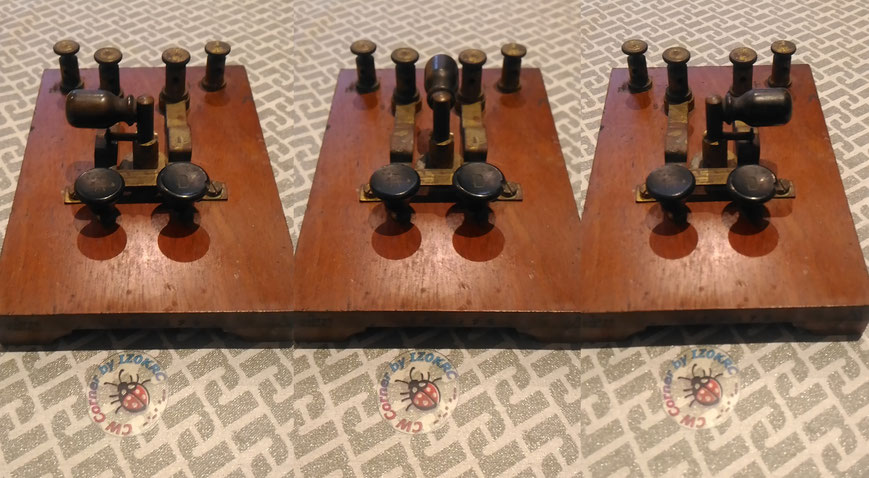
* Tasto telegrafico didattico Francese - Pericaud. (France)
LK.FR.001
Tasto telegrafico Francese prodotto dalla Società Pericaud in occasione del raduno Scout Internazionale "jamboree" di Parigi, del 1936.
Tutte le informazioni le ho trovate sul sito di Chris F9WT, molto ricco circa la produzione telegrafica Francese e non solo.
Vi invito a vistarlo : http://f9wtchris.wix.com/manipulateursmorse#!france/cri6
Ho inserito nella prima foto una moneta da 50c di Euro, per dare il senso della ridotta dimensione del tasto.
French telegraph key produced by the Péricaud Company for the 1936 International Scout Jamboree in Paris.
I found all the information on Chris F9WT's website, which is very comprehensive on French telegraph production and more.
I invite you to visit it: http://f9wtchris.wix.com/manipulateursmorse#!france/cri6
I've included a 50c euro coin in the first photo to convey the key's small size.
Up-date 17 August 2019


The next KEYS INCOMING ....