Teaching instruments
Transmitting for educational pourposes - 1901 Audible Audio
#DM.US.001
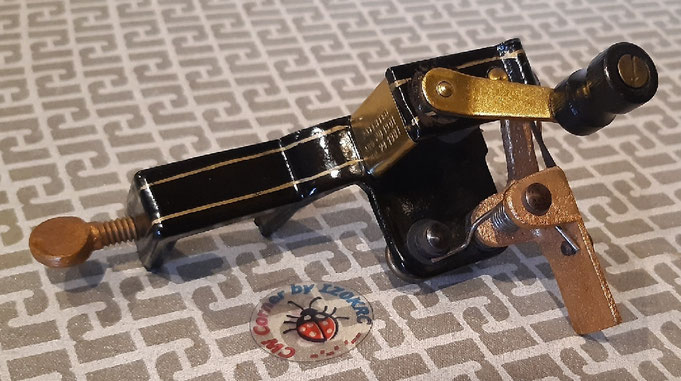
L’Audible Audio set è uno strumento per l'apprendimento del codice morse, meno noto dei vari Instructograph, Omnigraph e Teleplex.
E’ quindi il primo strumento semiautomatico per la didattica della telegrafia.
Oggi 24 Settembre 2021 compie esattamente 120 anni dal rilascio del suo brevetto. Lo inserisco non a caso proprio oggi sul mio sito “Straight CwCorner”, per festeggiare l’anniversario.
La Audible Alphabet Company aveva la sua sede nella città di Boston , stato del Massachusetts. Il suo strumento veniva venduto insieme a dei nastri pre forati e un libretto di istruzioni per l'uso e la traccia degli esercizi.
La macchinetta ha due targhe. Nella prima c'è scritto :"LEARNERS - AA TRASMITTER - AUDIBLE - ALPHABET CO - BOSTON MASS".
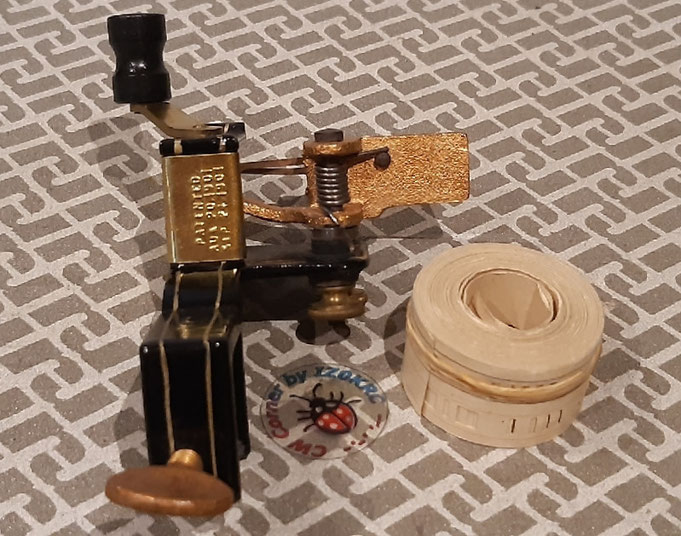
Nella seconda targa ci sono i riferimenti del brevetto 680,095 ."PATENTED AUG 20.1901 - SEP 24.1901"

US patent draft
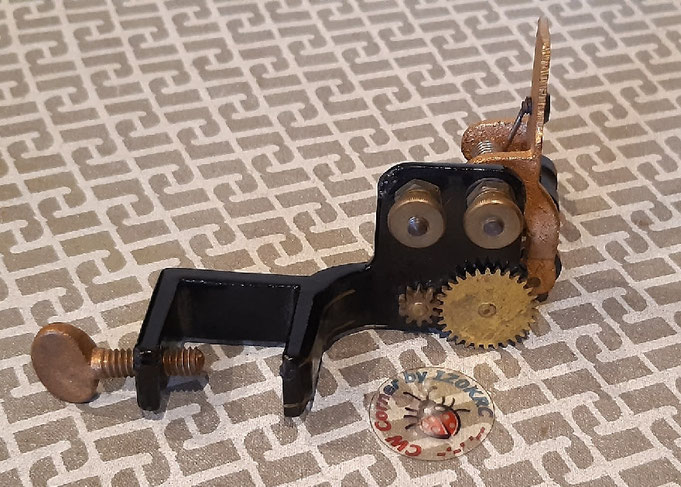
Il corpo dello strumento è in metallo nero laccato japaned, i meccanismi di movimento in ottone laccato con gomma lacca, la rotella pressa carta è in metallo, mentre i due contatti che cingono il perno della rotella sono in rame. La barra scorrevole dove è alloggiato il sistema mobile dei contatti pressa carta è in bronzo, come in bronzo è la vite che blocca lo strumento sul bordo del tavolo. Il cilindro mobile zigrinato posto sotto al nastro di carta è in acciaio, come in acciaio armonico è la molla di richiamo del braccio. La manopola della leva è in legno laccato.
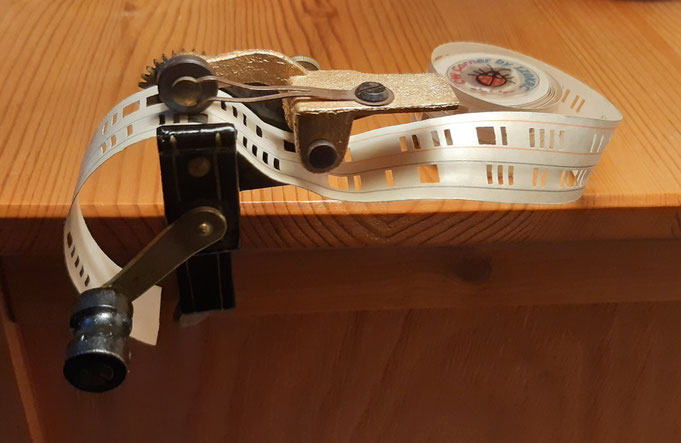
L'apprendimento del codice morse americano avveniva mediante lo scorrimento dei nastri pre forati all’interno dello strumento. Al loro passaggio, la parte della zona forata, permetteva al contatto di rame di toccare il cilindro zigrinato, mentre la parte non forata allontanava il contatto contrapponendosi per interrompere il contatto elettrico, in questo modo si generavano le note del codice morse mediante l’ausilio di un sounder e di una batteria.
Questo strumento l'ho trovato veramente in condizioni impeccabili, sembra uscito or ora dalla fabbrica, ma con 120 anni sulle sue spalle. Testato con una funzionalità al 100%, ipotizzo per le sue condizioni che è stata poco utilizzato dal suo precedente proprietario, ovviamente ben custodito nel tempo, lontano da polvere e umidità.
Nei primi anni del ‘900 lo strumento era molto popolare tra i giovani che volevano apprendere il codice Morse con il fine di trovar un lavoro remunerativo presso gli uffici postali o ferroviari degli USA. Una volta appreso il codice (e, si spera, acquisito un lavoro), la piccola macchinetta della A.A. Co. veniva messa in cantina o per meglio dire “nel dimenticatoio”, per questo molti esemplari sono andati persi determinando oggi la loro scarsità. Ancora più rari per i collezionisti sono i nastri e il libretto allegato, per via della maggiore vulnerabilità al tempo.
Il libretto di istruzioni forniva utili indicazioni per l'uso dello strumento, che andava abbinato sempre ad una batteria e un sounder per poter udire il codice morse Americano.
I nastri hanno una larghezza di 7/8 pollici. Questo strumento è arrivato corredato di ben 5 diversi nastri con varie lezioni, ciascun esercizio è descritto nel libro fornito con lo strumento. Gli esercizi contengono ogni uno 100 parole diverse cadenzate in gruppi di tre lettere ogni uno. I rotoli avevano per cosi dire una seconda facciata, bastava girarli prima di inserirli nella macchinetta per avere nuove combinazioni.
Ho messo in rete un breve video dimostrativo della sua funzionalità. Il set si compone di una batteria da 3,6V e un Sounder Tillotson .
Per il video clicca qui e buona visione.
24 Sett. 2021
The Audible Audio Set is a tool for learning Morse code, less well-known than the Instructograph, Omnigraph, and Teleplex.
It is therefore the first semi-automatic tool for teaching telegraphy.
Today, September 24, 2021, marks exactly 120 years since its patent was issued. It's no coincidence that I'm posting it today on my website, "Straight CwCorner," to celebrate the anniversary.
The Audible Alphabet Company was headquartered in Boston, Massachusetts. Its instrument was sold with pre-punched tapes and an instruction booklet with exercise plans.
The machine has two plates. The first reads: "LEARNERS - AA TRANSMITTER - AUDIBLE - ALPHABET CO - BOSTON MASS."
The second plate contains the references to patent 680,095: "PATENTED AUG 20, 1901 - SEP 24, 1901."
The body of the instrument is made of black lacquered metal, the movement mechanisms are made of brass lacquered with shellac, the paper-pressing wheel is made of metal, while the two contacts surrounding the wheel pin are made of copper. The sliding bar housing the movable paper-pressing contacts is made of bronze, as is the screw that secures the instrument to the edge of the table. The knurled movable cylinder located under the paper strip is made of steel, as is the arm return spring. The lever knob is made of lacquered wood.
American Morse code was learned by sliding pre-drilled strips inside the instrument. As they passed, the perforated part allowed the copper contact to touch the knurled cylinder, while the unperforated part moved away from the contact, interrupting the electrical contact. This generated the Morse code notes with the help of a sounder and a battery.
I found this instrument in truly impeccable condition; it looks like it just came out of the factory, yet it is 120 years old. Tested to be 100% functional, I assume from its condition that it was little used by its previous owner, who obviously kept it well-kept over time, away from dust and humidity.
In the early 1900s, the instrument was very popular among young people who wanted to learn Morse code with the aim of finding lucrative work at the post office or railroad stations in the US. Once they learned the code (and, hopefully, landed a job), the little AA machine became a household name. Co. was stored in the cellar, or rather, "forgotten," which is why many examples have been lost, resulting in their scarcity today. Even rarer among collectors are the tapes and the accompanying booklet, due to their greater vulnerability to aging.
The instruction booklet provided useful instructions for using the instrument, which always had to be paired with a battery and a sounder to hear American Morse code.
The tapes are 7/8 inches wide. This instrument came with five different tapes with various lessons, each exercise described in the booklet that came with the instrument. Each exercise contains 100 different words, arranged in groups of three letters. The rolls had a second side, so to speak; simply flip them over before inserting them into the machine to obtain new combinations.
I've posted a short video demonstrating its functionality online. The set includes a 3.6V battery and a Tillotson Sounder.
Click here for the video and enjoy!
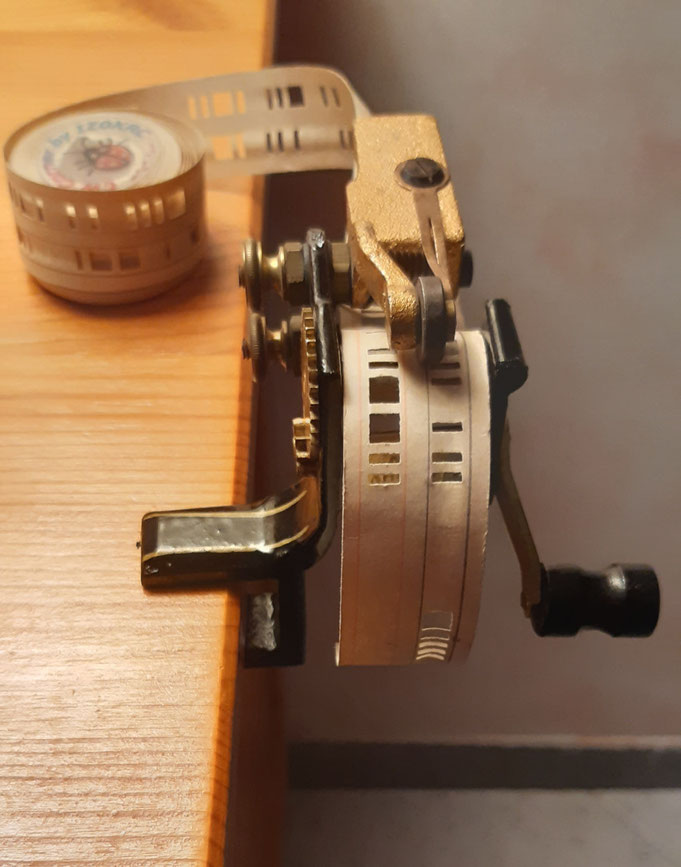
The OMNIGRAPH - 1902 Omnigraph Mfg. Co. 13 – 19 Hudson Street New York (NY) – USA
#DM.US.002
L’Omnigraph è uno “strumento per l’istruzione e la pratica della telegrafia”, questo è il titolo citato nel primo brevetto richiesto dal suo inventore Charles E. Cinnok nel 1902, con il numero di brevetto 773,374 rilasciato nell'anno 1904.
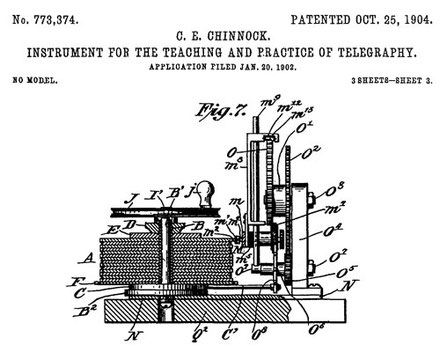
La società Omnigraph ha pubblicizzato e prodotto in almeno 30 anni di attività 15 diversi modelli di dispositivi per l'apprendimento telegrafico, lo strumento si compone di due parti principali, il cervello, mostrato nel disegno di brevetto (Fig. 7) che è la parte che genera i gruppi di codice Morse, il cuore della macchina è invece un orologio con movimento meccanico ( negli ultimi modelli sarà sostituito da motore elettrico).
Gli strumenti iniziali erano ad un disco, l’utente doveva cambiare ogni volta il disco per produrre messaggi diversi, seguirono poi altre versioni automatiche a più dischi e versioni equipaggiate con tasti, sullo stile dei Kob (key in Board) o con cicalini per ascoltare direttamente senza altri ausili il codice emesso.
La versione qui esposta è il 15 dischi. Il suo predecessore è il 5 dischi, meccanicamente identici si differenziano solo per la dotazione dei dischi. Il 5 dischi è apparso per la prima volta nel catalogo JH Bunnell nell’anno 1924. Il modello a cinque dischi è probabilmente il modello più popolare, si compone del motore ad orologeria, una pila di 5 dischi e un meccanismo a camma per spostare lo stilo di contatto dal disco inferiore verso il disco successivo .
Lo stilo di contatto prosegue il suo cammino salendo su ogni disco, quando arriva all’ultimo disco inverte il suo cammino verso il basso e così via. Un meccanismo regolabile consente all'utente di decidere se ascoltare l'intero disco prima di passare al disco successivo nello stack o se riprodurre un segmento del disco prima di passare al disco adiacente. 1/5, 2/5, 3 / 5,4 / 5 o l'intero disco potrebbe essere riprodotto prima di passare al disco successivo, questo permette all'utente di creare messaggi non ripetitivi molto più lunghi della somma di tutti i caratteri dei 5 ~15 dischi.
Ad esempio, se l'utente ha voluto riprodurre solo 2/5 del disco prima di passare al disco adiacente, quindi quando il disco raggiunge il livello più alto, comincerà a scendere nuovamente lungo la pila di dischi e giocherà un altro 2/5 segmenti di ogni disco sulla strada verso il basso. Al disco più basso, lo stilo comincerà ad ascendere nuovamente la pila di dischi, questa volta giocando un segmento 1/5 del disco già giocato con l'ultimo segmento 1/5 del disco che non è stato riprodotto. Questo sistema di generare i caratteri in modo casuale, consente di ascoltare diversi segmenti di dischi per i 2/5 miscelandoli, ottenendo molte centinaia di caratteri prima di ripetere il messaggio. Regolando il dispositivo per cambiare i dischi dopo 1/5 di un disco, quindi 2/5, 3/5, 4/5 o un disco completo, si potrebbe produrre un numero quasi infinito di caratteri non ripetuti prima. Naturalmente mescolando l'ordine dei dischi manualmente o girando uno o più dischi "fuori fase" con l'altro avrebbe consentito una maggiore varietà di caratteri.
Tra i vari modelli prodotti, c’è una versione completa di buzzer (cicalino) e una chiave, sullo stile Kob fabbricato per il Wireless Institute di New York. Il New York Wireless Institute era una scuola di corrispondenza presso l'istituto e la pubblicità menzionava un corso post-laurea in sede, l’Istituto era sito in Broadway Street al civico n.258.
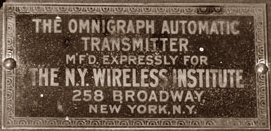
Una curiosità, tra il 1910-20 la sede della Vibroplex Co. era situata dall'altra parte della Via a 253 Broadway St. Gli studenti iscritti al corso di studio post-laurea del Wireless Institute desiderosi di acquistare un bug potevano comodamente farlo direttamente presso la fabbrica Vibroplex.
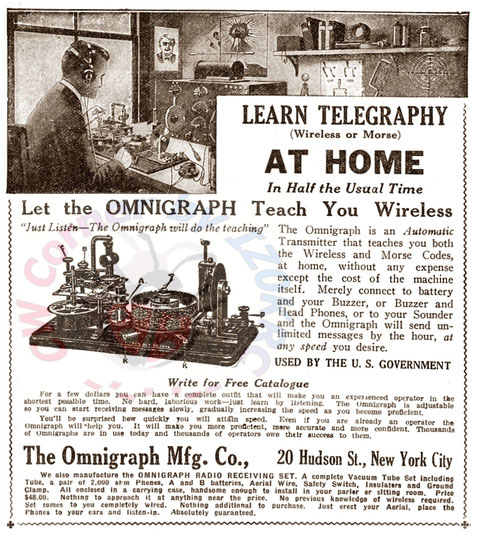
Di interesse, un catalogo della Omnigraph del 1930 dove venivano elencati i bug della Vibroplex in vendita all’epoca, incluso il modello # 4 ("Blue Racer") per la telegrafia via filo, ed il modello # 6 ("Lightning Bug") per la telegrafia wireless.
Se sei interessato ad approfondire il tema degli strumenti di apprendimento costruiti dalla Omnigraph, ti consiglio di vistare il Sito Web di David WA3LKN, ricco di foto disegni e dettagli.
The Omnigraph is an "instrument for the instruction and practice of telegraphy," as its inventor Charles E. Cinnok applied for the first patent in 1902, under patent number 773,374, issued in 1904.
Over its 30 years of operation, the Omnigraph company advertised and produced 15 different models of telegraphy learning devices. The instrument consists of two main parts: the brain, shown in the patent drawing (Fig. 7), which generates the Morse code groups; and the heart of the machine, a mechanical clockwork movement (replaced by an electric motor in later models).
The initial instruments had a single disk; the user had to change the disk each time to produce different messages. Other automatic versions with multiple disks followed, as well as versions equipped with keys, similar to the KOB (Key-in-Board) devices, or with buzzers to listen directly to the emitted code without any other aids.
The version shown here is the 15-disc model. Its predecessor, the 5-disc model, is mechanically identical, differing only in the number of discs. The 5-disc model first appeared in the J.H. Bunnell catalog in 1924. The 5-disc model is probably the most popular model; it consists of a clockwork motor, a stack of 5 discs, and a cam mechanism to move the contact stylus from the bottom disc to the next.
The contact stylus continues its path up each disc, reversing its path downward when it reaches the last disc, and so on. An adjustable mechanism allows the user to decide whether to play the entire disc before moving on to the next disc in the stack or to play a segment of the disc before moving on to the adjacent disc. 1/5, 2/5, 3/5, 4/5, or the entire disc can be played before moving to the next disc, allowing the user to create non-repeating messages much longer than the sum of all the characters on the 5–15 discs.
For example, if the user wanted to play only 2/5 of the disc before moving to the adjacent disc, then when the disc reaches the top level, it will begin to descend the disc stack again, playing another 2/5 segments of each disc on the way down. At the lowest disc, the stylus will begin to ascend the disc stack again, this time playing a 1/5 segment of the disc already played along with the last 1/5 segment of the disc that was not played. This system of randomly generating characters allows the user to listen to different disc segments for 2/5 by mixing them together, resulting in many hundreds of characters before repeating the message. By adjusting the device to change the disks after 1/5 of a disk, then 2/5, 3/5, 4/5, or a complete disk, a nearly infinite number of previously unrepeated characters could be produced. Of course, shuffling the disk order manually or rotating one or more disks "out of phase" with each other would have allowed for a greater variety of characters.
Among the various models produced, there is a version complete with buzzer and key, in the Kob style, manufactured for the New York Wireless Institute. The New York Wireless Institute was a correspondence school at the institute, and advertisements mentioned an on-site graduate program; the Institute was located on Broadway Street at 258.
Interestingly, between 1910 and 1920, the Vibroplex Co. headquarters was located across the street at 253 Broadway St. Students enrolled in the Wireless Institute's graduate program who wanted to purchase a bug could conveniently do so directly from the Vibroplex factory.
Of interest is a 1930 Omnigraph catalog listing the Vibroplex bugs on sale at the time, including Model #4 ("Blue Racer") for wire telegraphy and Model #6 ("Lightning Bug") for wireless telegraphy.
If you're interested in learning more about the learning tools built by Omnigraph, I recommend visiting David WA3LKN's website, which is full of photos, drawings, and details.
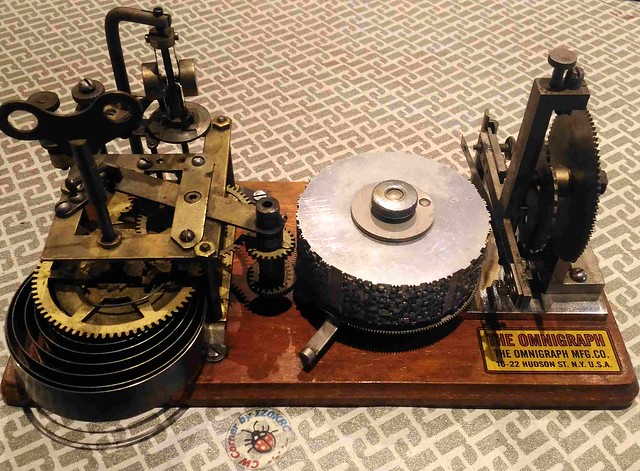 Omnigraph 15 disks
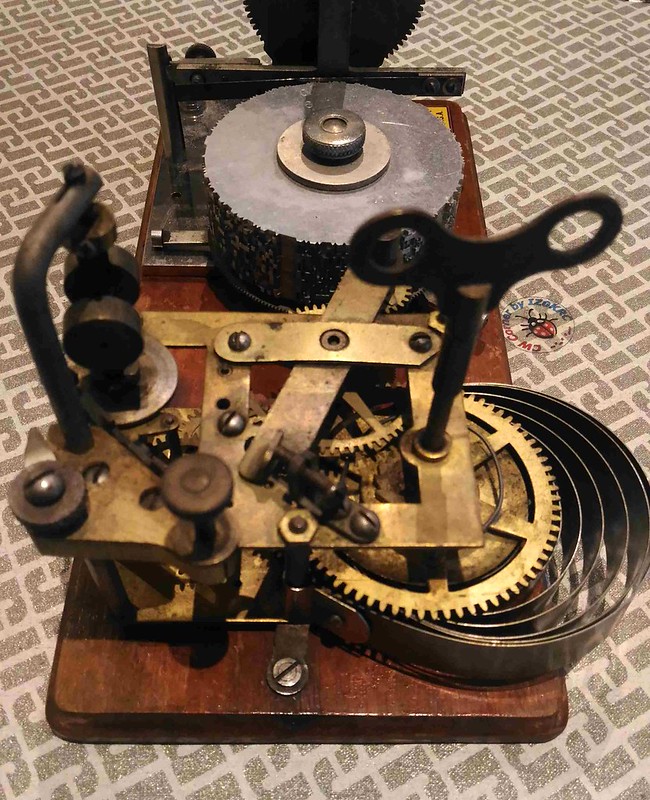 The Omnigraph
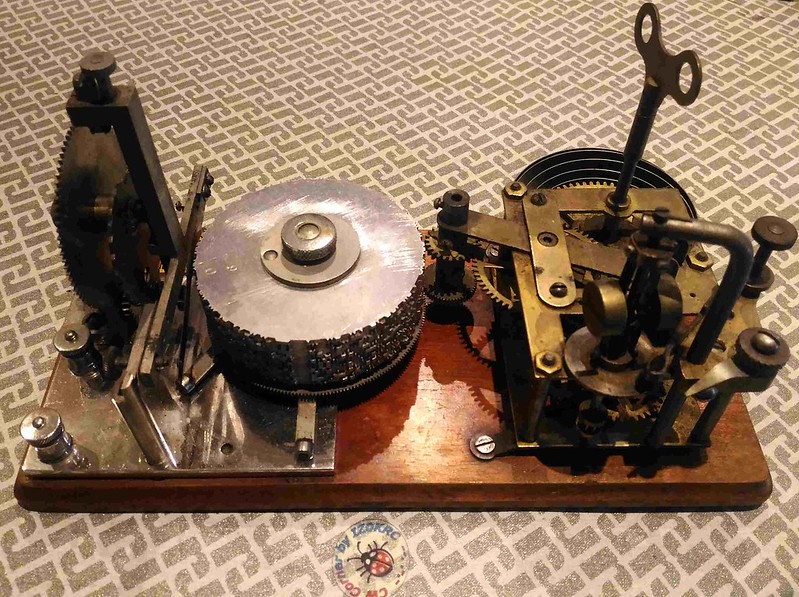 Omnigraph 15 disks
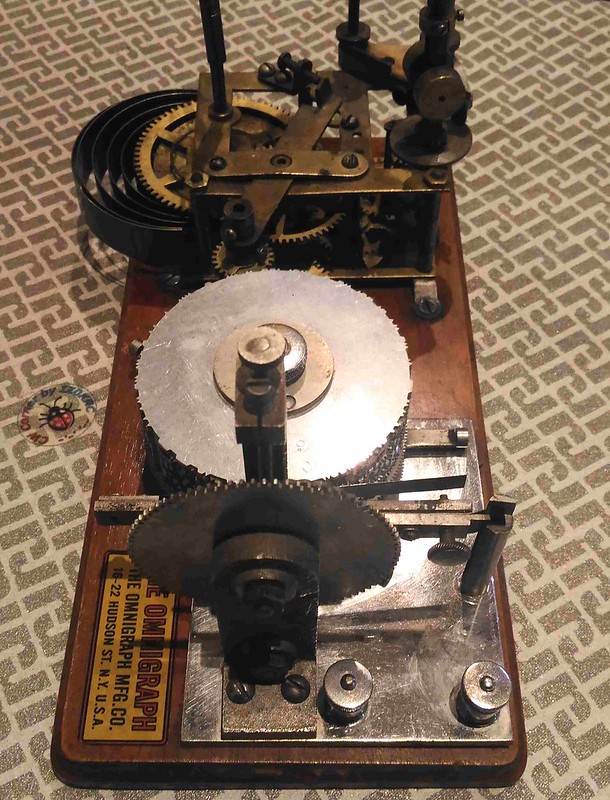 The Omnigraph
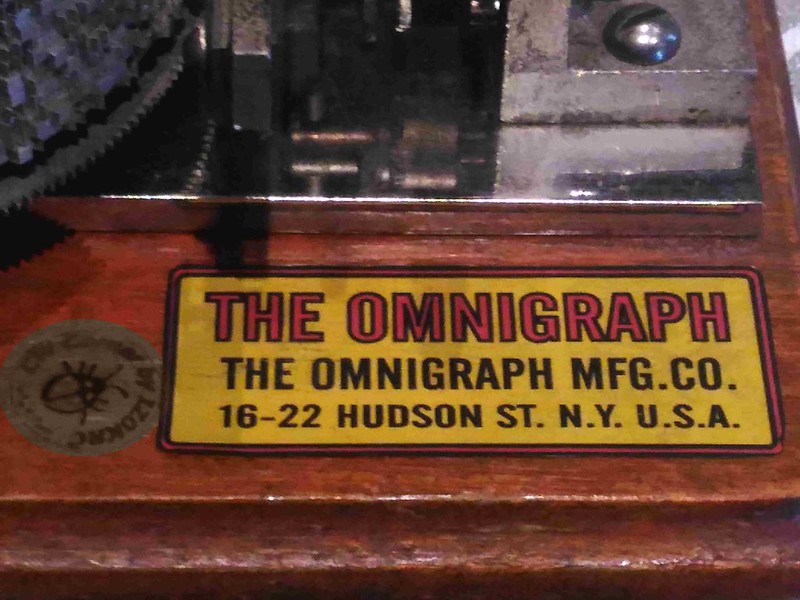 Omnigraph 15 disks, particular of firma plate
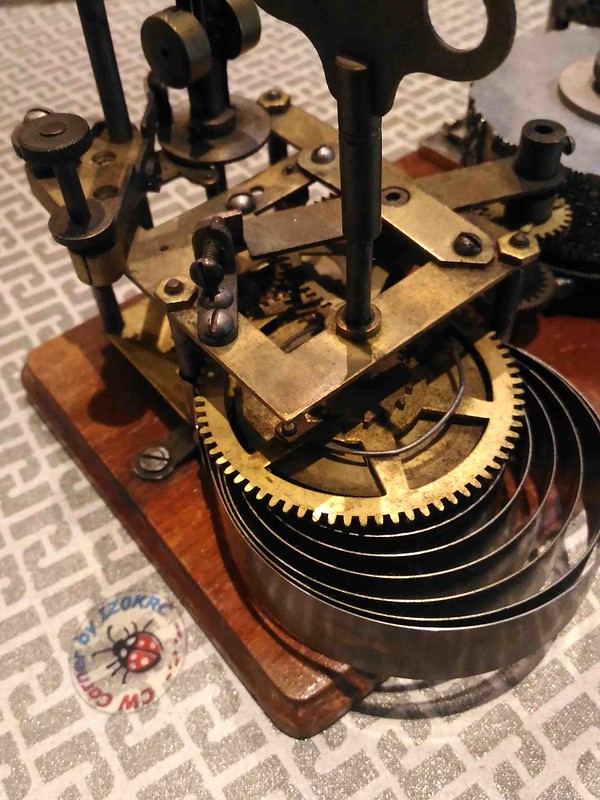 Omnigraph 15 disks, particular of engine system
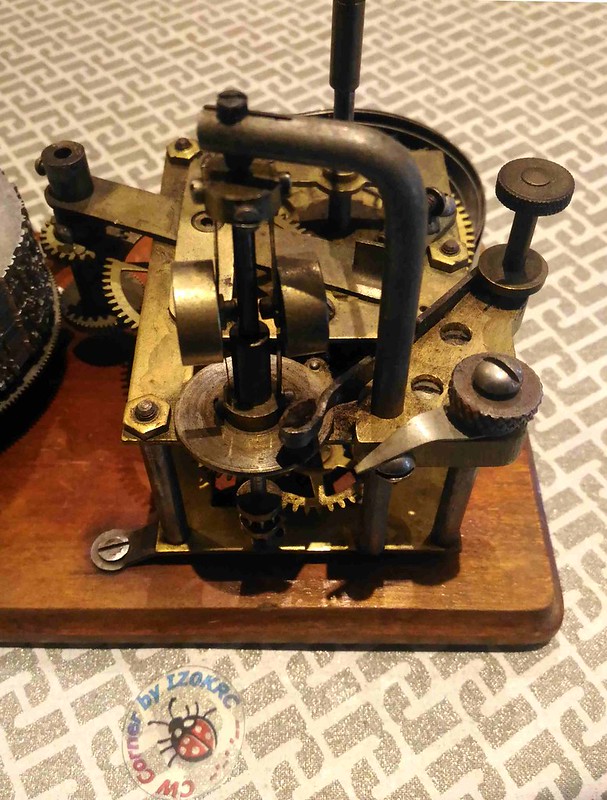 Omnigraph 15 disks, particular of engine system
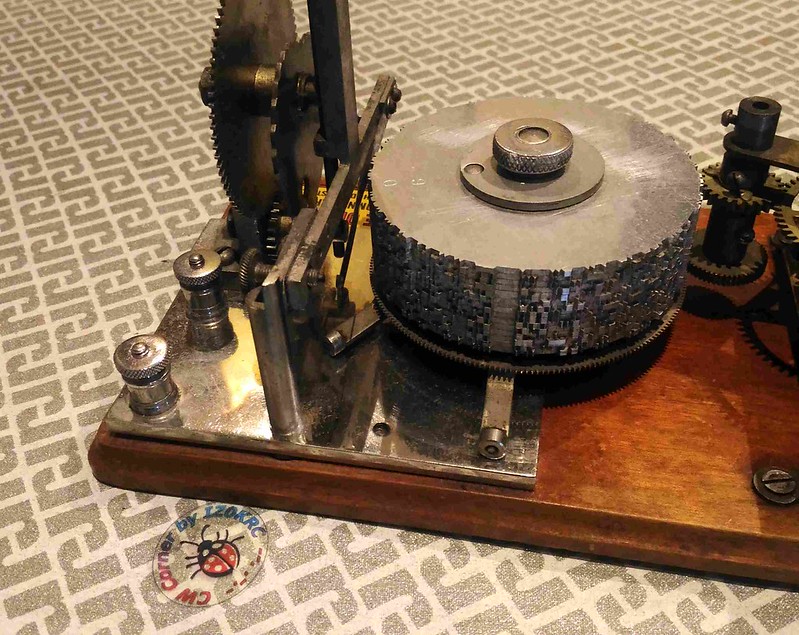 The Omnigraph, particular of 15 disks
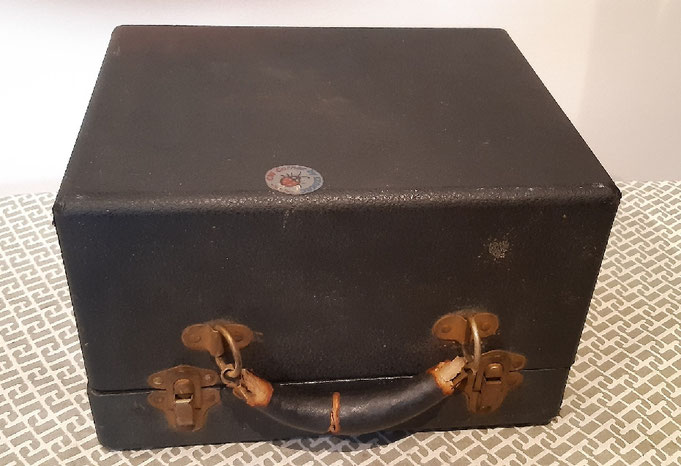
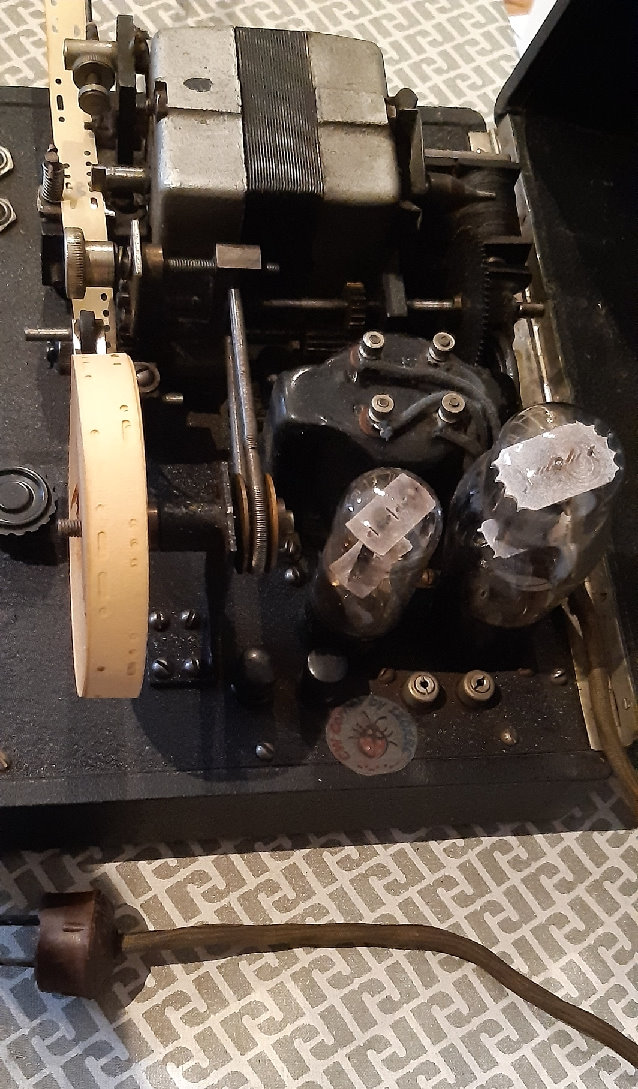
Teleplex - 1933 new model of Master teleplex. Teleplex Co. 76 Cortland Street, New York City
#DM.US.003
Lo strumento d'istruzione prodotto dalla Teleplex appare nel Dicembre del 1930 per la prima volta in una pubblicità su QST Magazine : "Drawing of a ear 'All You Need to Learn Telegraphy' Drawing of a hand Morse or Continental with Teleplex"
Uno strumento garantito per insegnare la professione più affascinante del mondo. A ascoltando messaggi reali
Interessante, semplice, impari velocemente il codice morse a casa
Teleplex è il Master Teacher, Utilizzato dall'esercito degli Stati Uniti, dalla marina e dalle scuole di lettura, radio e telegrafo. * Scrivi a P.O. box Q-12 * - "Teleplex Company, 76 Cortland Street, New York .
Il nuovo modello, quello sotto esposto, appare sempre una pubblicità di QST Magazine nel Febbraio del 1933.
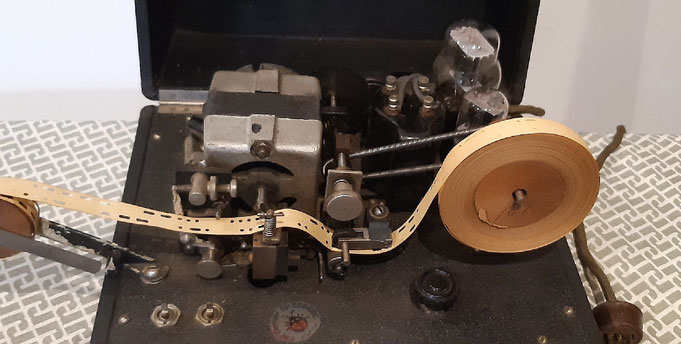
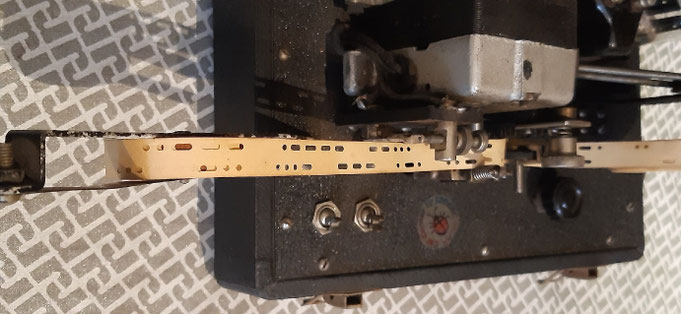
Dalla pubblicità si legge che il Teleplex ha 13 nastri pre forati come corredo. Io ne ho solmanete 8 arrivati con questa macchinetta, ma uno di questi ha inciso n.13. Questo mi fa ipotizzare che la Teleplex vendeva separatamente ulteriori nastri pre forati.
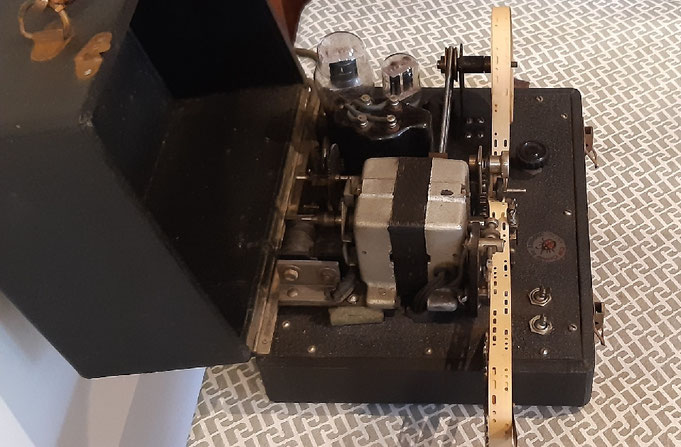
Funziona a 100v, conserva ancora la presa completa di spina a tre poli. L'azionamento avviene per mezzo di un motorino elettrico, comandato per la velocità da una manopola e un set di leve che davano lo stand by e la partenza al sistema. La nota viene generata dalle due valvole termoioniche installate sul set. I nastri pre forati contengono lezioni in codice morse internazionale.
26 Gennaio 2021
The Teleplex teaching device first appeared in an advertisement in QST Magazine in December 1930: "Drawing of an ear 'All You Need to Learn Telegraphy' Drawing of a hand Morse or Continental with Teleplex"
A tool guaranteed to teach the world's most fascinating profession. Listening to real messages
Interesting, simple, quickly learn Morse code at home
Teleplex is the Master Teacher, used by the U.S. Army, Navy, and reading, radio, and telegraph schools. * Write to P.O. Box Q-12 * - "Teleplex Company, 76 Cortland Street, New York.
The new model, the one shown below, also appears in a QST Magazine advertisement from February 1933.
The advertisement states that the Teleplex came with 13 pre-punched tapes. I only had 8 of them that came with this machine, but one of them was marked 13. This leads me to believe that Teleplex sold additional pre-punched tapes separately.
It operates at 100 volts and still has its original three-prong plug. It is operated by an electric motor, with speed controlled by a knob and a set of levers that controlled the system's standby and start modes. The note is generated by the two vacuum tubes installed on the set. The pre-punched tapes contain lessons in international Morse code.

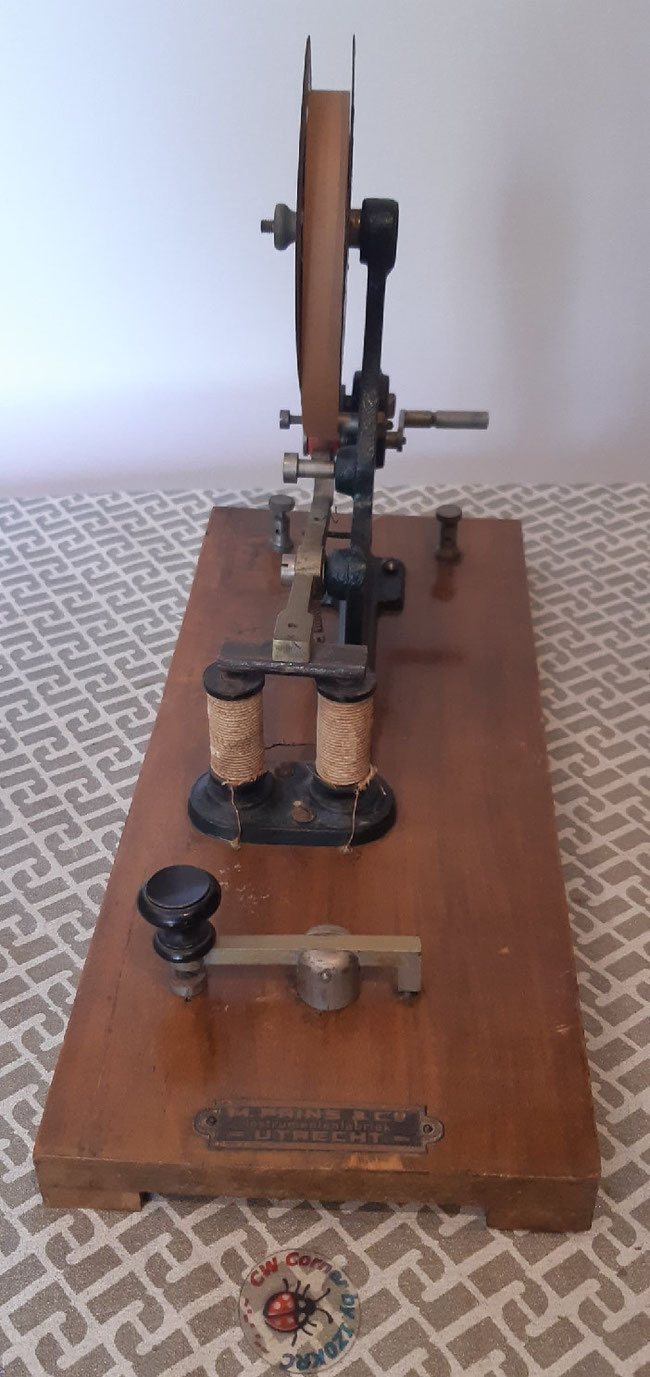
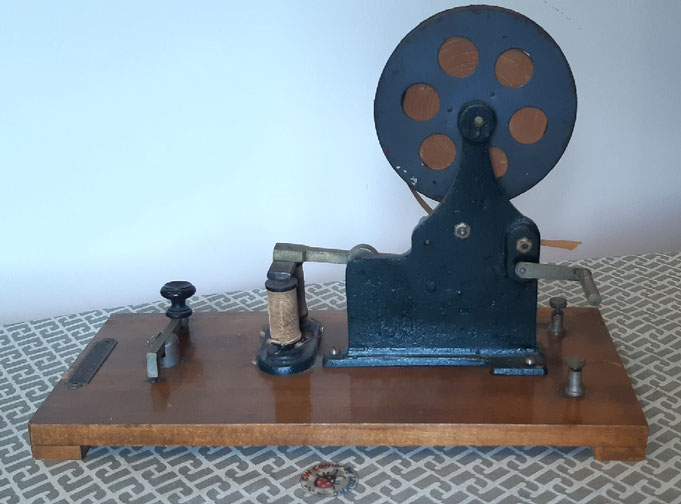
M. Prins & Co. - set telegrafico Olandese di uso scolastico
#DM.NL.001
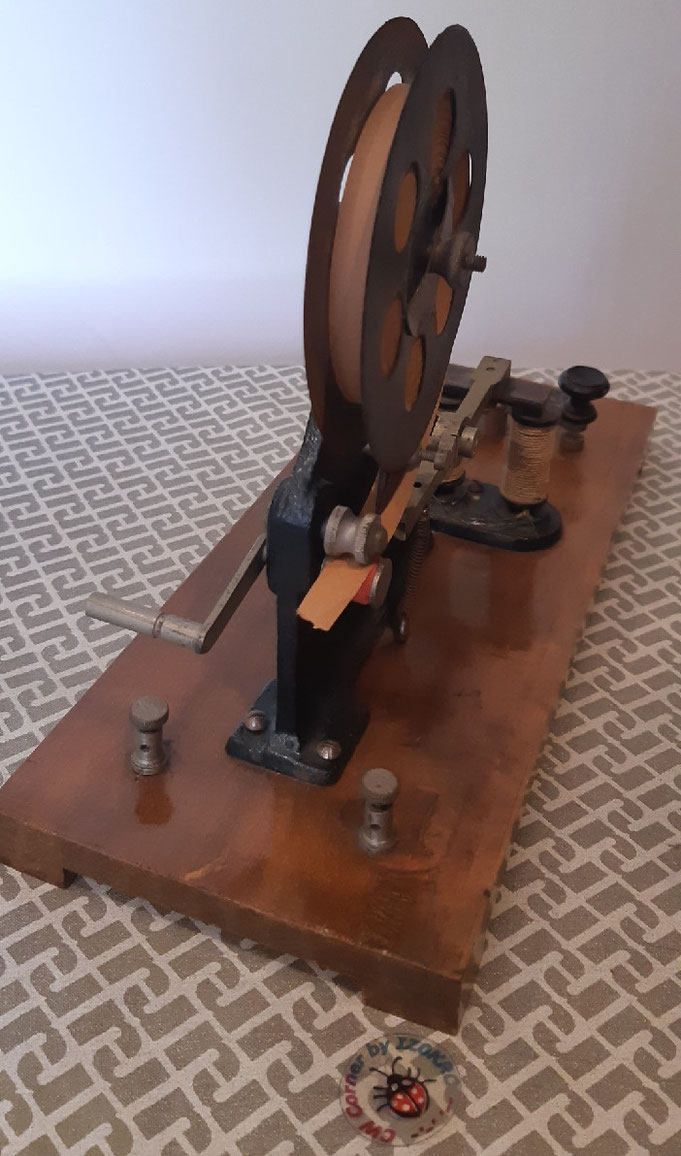
Set telegrafico dimostrativo in uso nelle aule didattiche, databile primi del '900.
Materiali, per la base legno di quercia, il corpo principale del registratore telegrafico è stato realizzato in fusione di ghisa, mentre l'hardware è in ottone, in parte nichelato. Lo strumento ha un incudine che scrive a secco sulla zona il messaggio ricevuto.
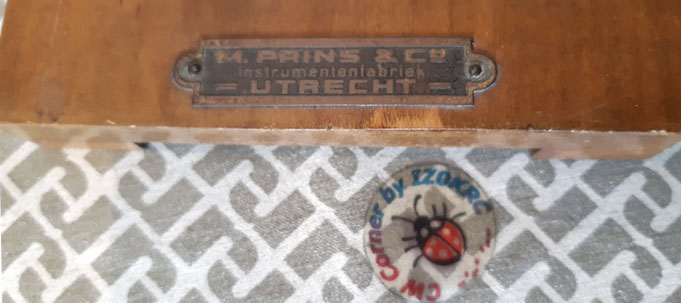
Set costruito in Olanda dalla Società M. Prins e Company di Utrech, specializzata in strumenti didattici e da laboratorio,
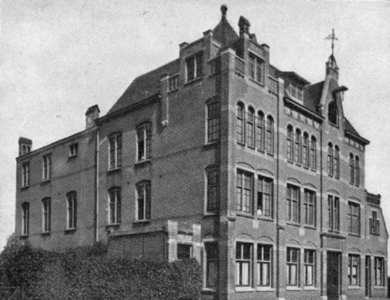
Immagine storica della Fabrica M. Prins & Co. di Utrech NL.
12 Sett. 2021
Demonstration telegraph set used in classrooms, dating back to the early 1900s.
Materials: Oak wood for the base; the main body of the telegraph recorder is cast iron, while the hardware is brass, partially nickel-plated. The instrument has an anvil that embosses the received message.
Set built in Holland by the M. Prins & Company of Utrecht, specializing in educational and laboratory instruments.

G. C & Co. - Registratore telegrafico Tedesco ad uso didattico, modello N.5
#DM.D. 001
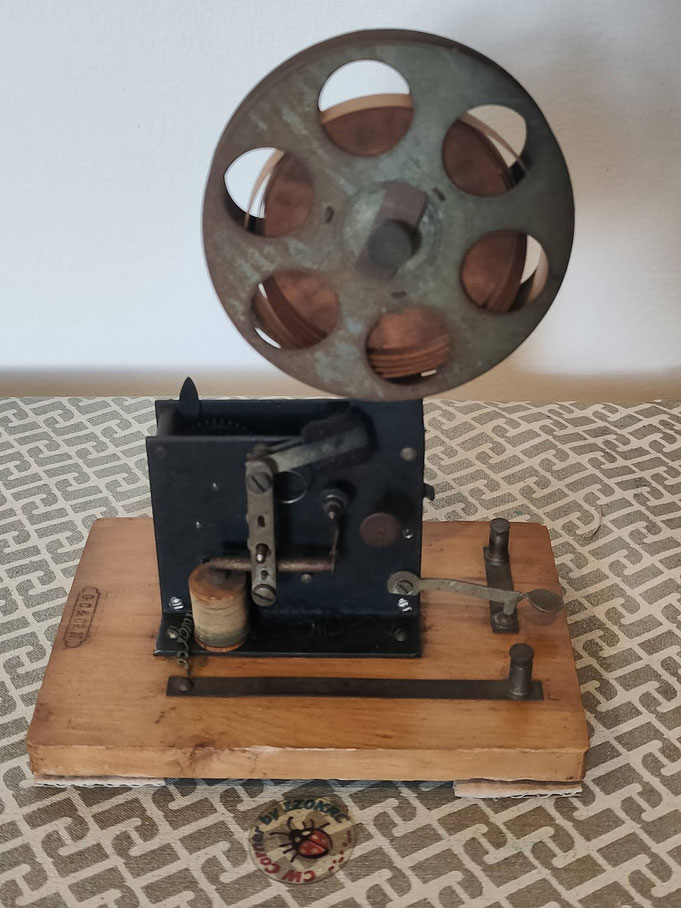
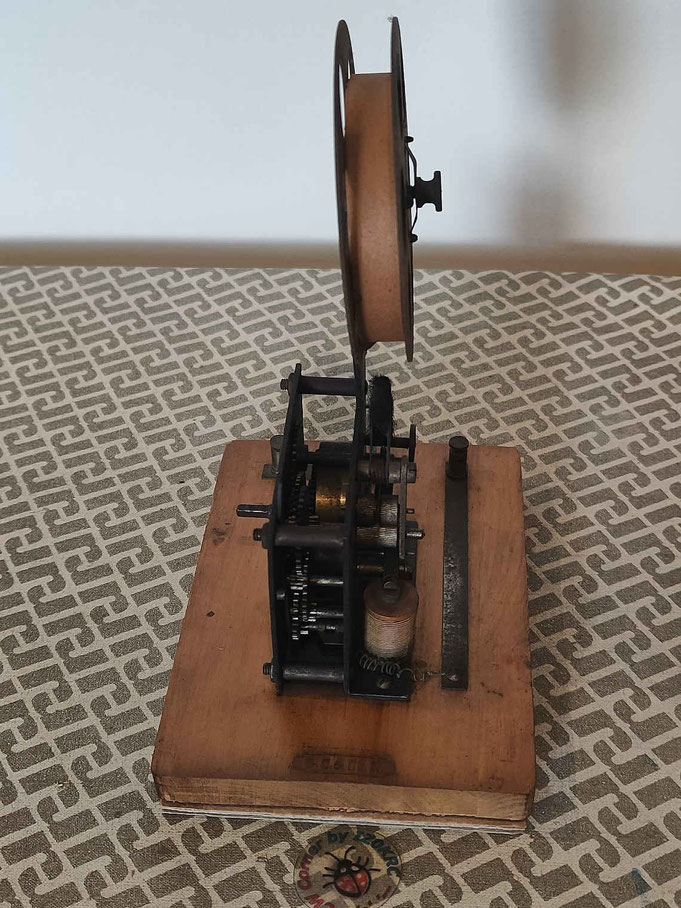
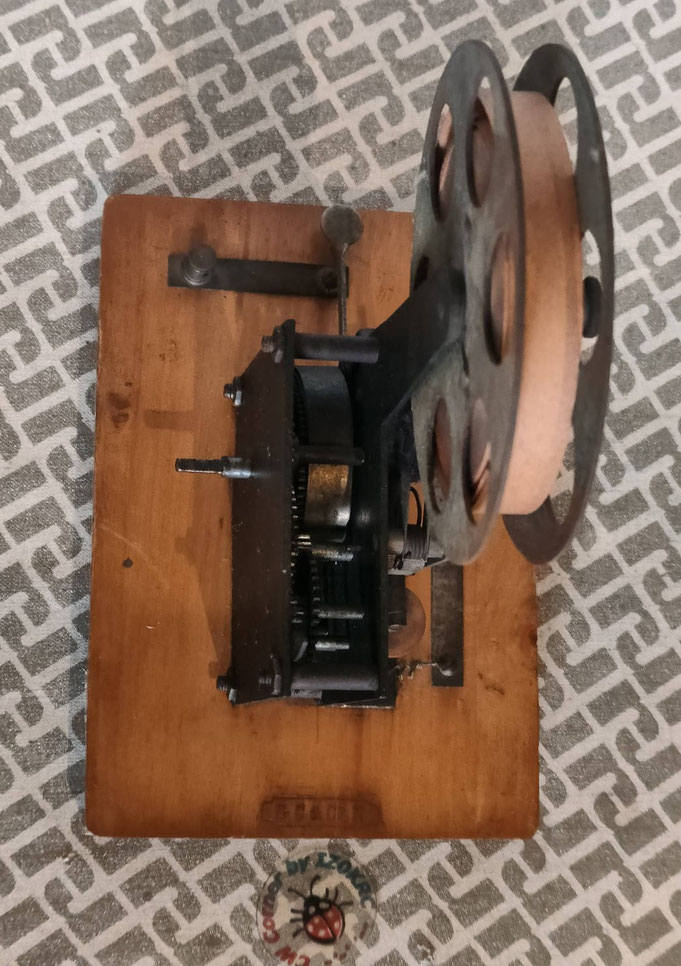
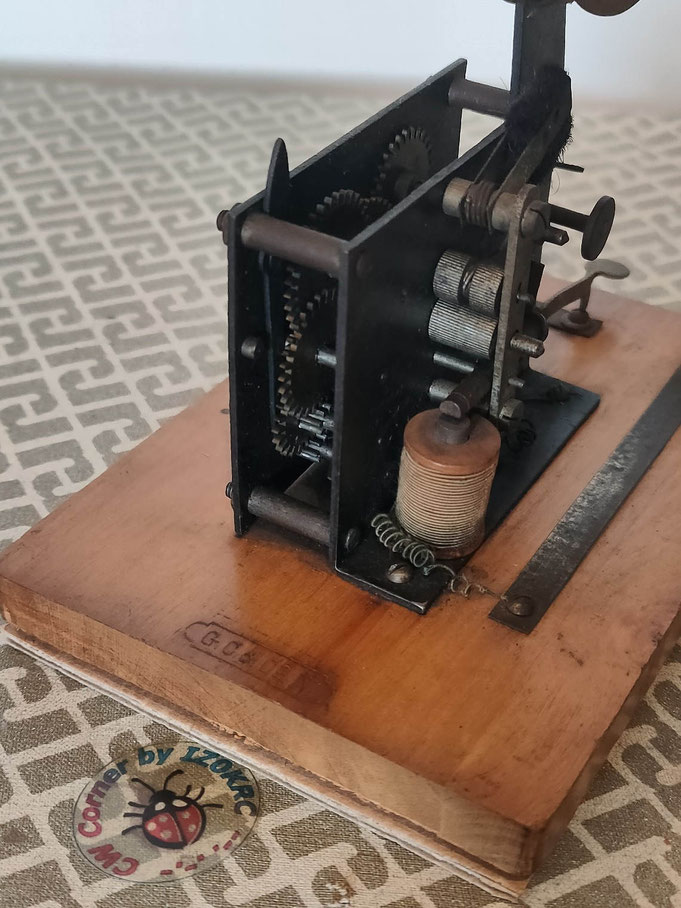
Registratore telegrafico dimostrativo Tedesco, costruito dalla ditta G.C. & Co. di Solingen, nota per la costruzione di favolosi coltelli e spade.
28 Settembre 2022.
German demonstration telegraph recorder, built by the firm G.C. & Co. of Solingen, known for the construction of fabulous knives and swords.
Set didattico Gamages
Interessante e funzionale set didattico prodotto dalla società Inglese Gamages.
Set didattico per la trasmissione del codice morse, luminoso e acustico.
Selezionando all’origine la posizione della leva posta al lato opposto dei terminali, l’operatore poteva scegliere il modo di emissione. Morse luminoso o morse acustico.

Come ben noto, il codice morse è unico, ma gli operatori si suddividevano tra lettori di codice morse o ascoltatori di codice morse. Sono due classi ben nette di operatori.

La telegrafia acustica avveniva quindi per del cicalino o buzzer posto al lato sinistro del tasto, mentre i segnali ottici avvenivano dando impulso a una piccola lampadina che generava luce dentro una lente concentratrice.

Questo sistema permetteva di focalizzare il fascio luminoso su una parete posta anche a una significativa distanza, per dare modo agli studenti di poter "leggere" il codice morse.
Il kit si può vedere esposto al museo di East Midland, Regno Unito: http://www.museumoftechnology.org.uk/objects/_expand.php?key=572
Un bel set didattico, semplice e funzionale, prodotto nei primi anni del '900 dalla ditta Gamages di Londra.
Esistono almeno tre varianti di questo set. Differiscono tra loro per avere più o meno il logo Gamages, mentre una delle tre versioni presenta una differenza sostanziale rispetto alle altre, ha il concentratore in nichel e ha sotto la tavola di contenimento in legno di rovere, vi è incollato un piccolo foglietto d'istruzione. Esiste anche una versione didattica semplificata del set, senza gli accessori per la telegrafia ottica, visibile in basso.

Una vasta esposizione dei flyer pubblicitari contenuti nel catalogo Gamages sono visibili su questo sito:
https://www.aviationancestry.co.uk/?searchQuery=Gamages&startYear=1909&endYear=1990

Storia dei grandi magazzini Gamages
AW Gamages Ltd era una società localizzata nel retrobottega di uno dei più grandi e famosi magazzini di Londra: i grandi magazzini Gamages. Il negozio aprì nel 1878, vendevano articoli per la casa di buona qualità e a prezzi accessibili.
La pubblicazione di cataloghi di vendita è stato il loro cavallo di battaglia, dando ai i clienti un utile supporto per velocizzare i loro acquisti, con possibilità di consegna direttamente nelle loro abitazioni. La Gamages furono anche pionieri nelle spedizioni a domicilio, anche verso l’estero.
I grandi magazzini Gamages vendevano di tutto, dai cestini da picnic agli accessori per auto, strumenti telegrafici, giocattoli e molto altro ancora.
La loro attività ottenne un enorme successo, negli anni '60 aprirono un secondo negozio nell'Essex.
Agli inizi degli anni '70 iniziò il declino della società e così l'azienda venne acquisita dallo Sterling Guarantee e di li a poco la società Gamages chiude definitivamente i battenti, precisamente nell’anno 1972..
Educational set by Gamages Co.
Interesting and functional educational set produced by the English company Gamages.
Educational set for transmitting Morse code, both light and sound.
By originally selecting the position of the lever on the opposite side of the terminals, the operator could choose the transmission mode: light Morse or sound Morse.
As is well known, Morse code is unique, but operators were divided into Morse code readers and Morse code listeners. These are two distinct classes of operators.
Acoustic telegraphy was therefore carried out by a buzzer or buzzer located on the left side of the key, while optical signals were produced by activating a small bulb that generated light inside a concentrating lens.
This system allowed the light beam to be focused on a wall even at a significant distance, allowing students to "read" Morse code.
The kit can be seen on display at the East Midland Museum, UK: http://www.museumoftechnology.org.uk/objects/_expand.php?key=572
A beautiful, simple, and functional educational set, produced in the early 1900s by the Gamages company of London.
There are at least three variations of this set. They differ in having the Gamages logo to varying degrees, while one of the three versions has a substantial difference from the others: it has a nickel concentrator and an oak board underneath, with a small instruction leaflet glued to it. There is also a simplified educational version of the set, without the optical telegraphy accessories, shown below.
A large selection of Gamages catalog can be viewed on this link: https://www.aviationancestry.co.uk/?searchQuery=Gamages&startYear=1909&endYear=1990
History of Gamages Department Store
AW Gamages Ltd was a company located in the back room of one of London's largest and most famous department stores: Gamages. The store opened in 1878, selling high-quality household goods at affordable prices.
Their flagship product was the publication of sales catalogs, providing customers with a useful tool to expedite their purchases, with the option of home delivery. Gamages also pioneered home delivery, including international shipping.
Gamages sold everything from picnic baskets to car accessories, telegraph instruments, toys, and much more.
Their business was enormously successful, and in the 1960s they opened a second store in Essex.
In the early 1970s, the company began to decline, and was acquired by Sterling Guarantee. Shortly thereafter, Gamages closed its doors for good, in 1972.